
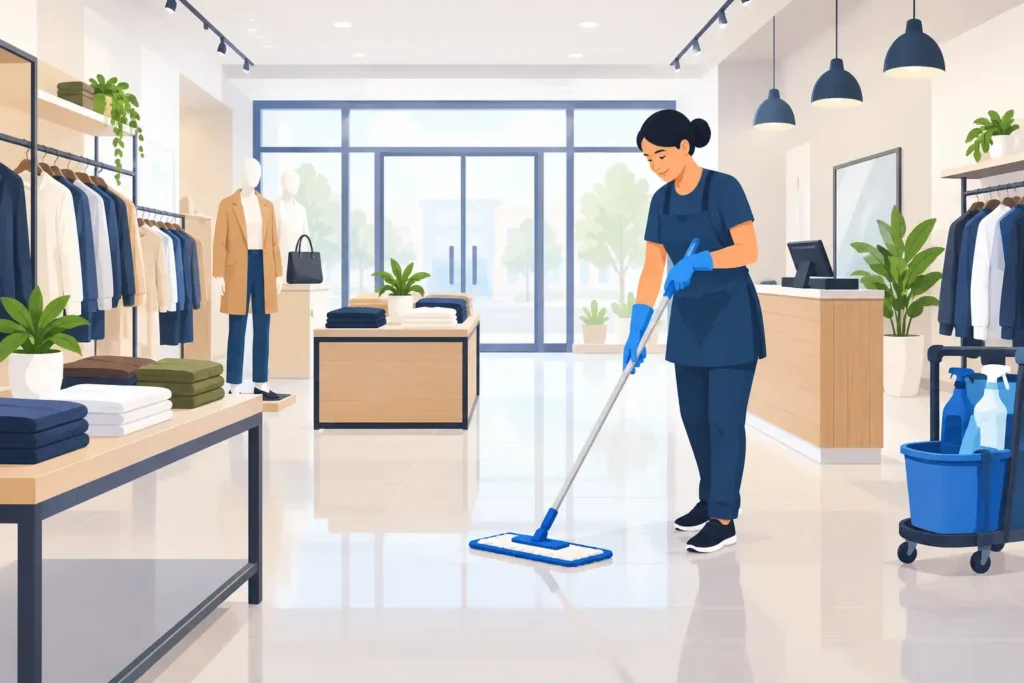
A customer may not say anything about dusty shelves, streaked glass, or a dirty restroom. They may simply decide not to come back. This retail store cleaning guide helps store owners and managers create a cleaner, healthier environment that supports customer confidence from the front door to the checkout counter.
Retail cleaning is more than making a store look presentable before opening. It protects merchandise, reduces odors, helps prevent the spread of germs, and gives employees a workplace they can feel good about. The right routine also keeps small messes from turning into expensive problems, such as stained flooring, damaged fixtures, or complaints that affect your reputation.
Start With the Customer’s First Impression
The entrance sets the standard for the entire visit. If doors, windows, floor mats, and display glass are dirty, customers often assume the rest of the store has been neglected too. That judgment can happen in seconds.
Each day, clean entry doors and handles, remove smudges from glass, shake out or vacuum entry mats, and inspect the floor for leaves, salt, water, or debris. During rainy or snowy New Jersey weather, entrances may need attention several times a day. Wet floors are not only unattractive – they are a slip-and-fall risk.
Keep exterior walkways clear as well when they are part of your responsibility. Trash, cigarette litter, and overflowing outdoor bins can hurt the appearance of an otherwise well-maintained store.
Build a Retail Store Cleaning Schedule That Fits Traffic
A cleaning plan should follow how your store actually operates. A boutique with light weekday traffic needs a different schedule than a busy grocery, salon, showroom, or convenience store. The goal is not to clean every surface constantly. The goal is to keep high-touch and high-visibility areas consistently under control.
Opening Tasks
Before customers arrive, employees or a cleaning team should walk the store with fresh eyes. Check the front windows, entrance, floors, mirrors, counters, and restrooms. Empty trash if needed, wipe down visible surfaces, and make sure there are no odors or clutter around the register area.
Opening is also the best time to address overnight dust. Dust shelves, displays, ledges, and fixtures with a clean microfiber cloth. Avoid using the same cloth on sales floors and restroom surfaces. Cross-contamination is easy to create when supplies are not separated by area.
During Business Hours
Daytime cleaning needs to be quick, discreet, and focused on what customers touch or notice most. Check restrooms regularly, remove spills immediately, empty overflowing trash, and wipe high-touch points such as door handles, card terminals, shopping baskets, fitting room handles, and counter surfaces.
The checkout area deserves special attention. It is often the final place customers see before leaving, and it collects dust, receipts, fingerprints, and packaging debris quickly. A clean counter and clear work area help your staff appear organized and ready to help.
Closing Tasks
Closing cleaning should reset the store for the next day. Vacuum or sweep all floors, mop hard surfaces, clean restrooms thoroughly, remove trash, and disinfect high-touch surfaces. Restock toilet paper, hand soap, paper towels, and other restroom supplies before the next shift begins.
Closing is also the right time for tasks that are difficult to complete around customers, including cleaning mirrors, wiping display shelving, spot-cleaning walls, and washing interior glass. If your team is rushing to leave, these tasks may get skipped. That is one reason many businesses choose a dependable professional cleaning service for after-hours care.
Clean Floors Based on Their Material and Condition
Flooring takes the hardest daily wear in any retail environment. Dirt from shoes, spills, carts, product packaging, and seasonal weather can make even a well-stocked store look neglected.
Vacuum carpets and rugs daily in active areas. Address stains as soon as possible, since old stains are harder and more costly to remove. Hard floors should be swept or dust mopped before they are wet mopped. Mopping over loose grit can leave residue behind and may scratch some surfaces.
The correct cleaning product matters. Using too much chemical, the wrong floor cleaner, or an overly wet mop can leave dullness, sticky residue, or damage. Vinyl, tile, hardwood, laminate, and polished concrete all need different care. When floors begin to look worn despite routine mopping, deep cleaning, buffing, or professional floor maintenance may be the better investment.
Keep Restrooms Clean, Stocked, and Odor-Free
Customers judge a retail restroom closely because it signals how a business handles hygiene. A restroom can look acceptable at opening and still become a problem by midday, especially in high-traffic locations.
Clean and disinfect toilets, sinks, faucets, door handles, dispensers, and baby changing stations where applicable. Wipe mirrors until they are streak-free, empty waste bins, and mop the floor. Check corners, behind toilets, and around the base of fixtures, where grime and odors often build up.
A visible restroom check log can improve accountability, but it only works if staff actually complete the checks. Assign clear ownership for inspections and make sure employees know who to notify when supplies are low or repairs are needed. A broken dispenser, leaking toilet, or persistent odor should not wait until the end of the week.
Pay Attention to High-Touch Surfaces
Sanitizing is not the same as cleaning. Cleaning removes visible dirt and residue. Disinfecting uses an appropriate product and contact time to reduce germs on surfaces. Both steps matter, especially around areas touched by many people throughout the day.
Focus on door handles, push plates, counters, POS equipment, phones, light switches, handrails, fitting rooms, baskets, carts, and employee break areas. Follow product label directions carefully. Spraying and immediately wiping a disinfectant away may not give it enough contact time to work as intended.
Avoid treating every surface with harsh chemicals. Certain displays, electronics, painted fixtures, and specialty materials require gentler methods. When in doubt, test a small hidden area or use a product approved for that surface.
Do Not Let Back Rooms Become a Cleaning Blind Spot
Customers may never enter your stockroom, office, break room, or receiving area, but poor conditions there eventually affect the sales floor. Overflowing cardboard, food spills, cluttered supplies, and neglected trash can attract pests, create fire hazards, and make it harder for staff to work efficiently.
Set aside time to break down boxes, remove trash, clean employee tables and appliances, and organize cleaning supplies. Keep chemicals labeled and stored safely away from food, merchandise, and unauthorized access. A clean back room also makes inventory checks and deliveries easier to manage.
Know When to Bring in Professional Help
Employees can handle light daily upkeep, but asking them to manage deep cleaning on top of sales, customer service, stocking, and closing duties can lead to inconsistent results. It also creates uncertainty about whether cleaning products are being used safely and whether high-priority areas are getting enough attention.
A professional retail cleaning team can provide scheduled after-hours service, detailed restroom care, floor maintenance, window cleaning, and sanitation support based on your store’s needs. Look for a provider with trained staff, clear communication, dependable scheduling, and proper insurance and bonding. The lowest quote is not always the best value if missed cleanings or poor-quality work put your store’s image at risk.
JPR Cleaning helps New Jersey businesses maintain clean, healthy, and welcoming retail spaces with reliable service tailored to their operating schedule. A free estimate can help you determine which tasks belong in daily staff routines and which are better handled by a professional crew.
A clean store should never depend on a last-minute scramble before opening. Give every shift a simple standard, inspect the details customers notice, and address problems while they are still small. That steady care is what customers remember when they decide where to shop again.