
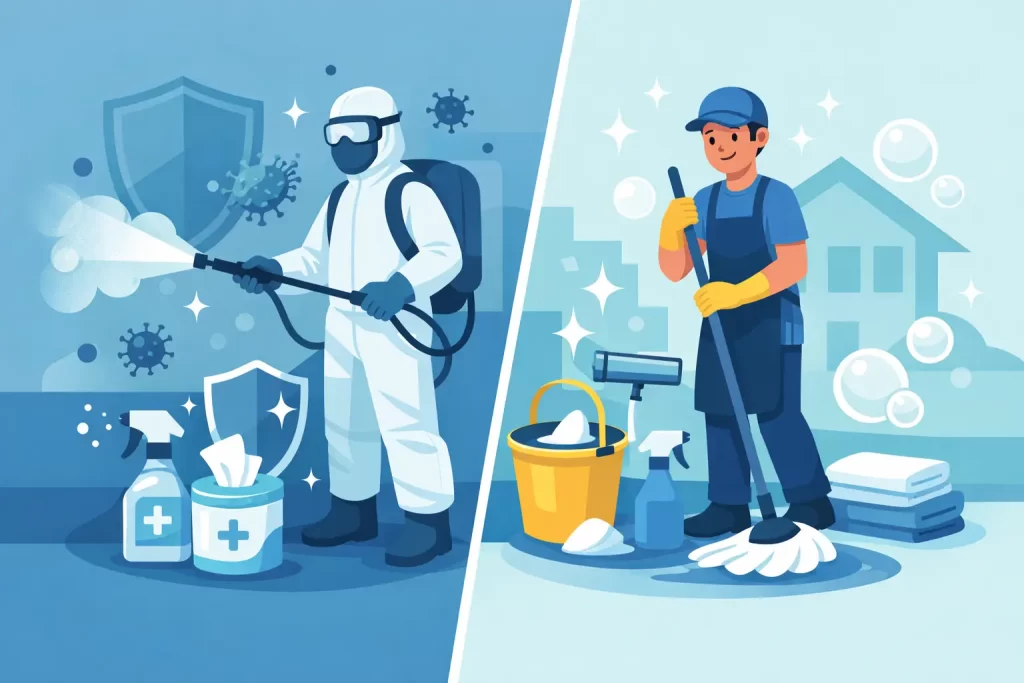
A clean-looking kitchen counter, office lobby, or bathroom is not always a disinfected one. That distinction matters when you are choosing disinfecting vs standard cleaning services for your home, apartment, office, or retail space. Standard cleaning handles the visible mess and routine buildup that make a space feel neglected. Disinfecting targets germs on high-touch surfaces after those surfaces have been properly cleaned.
Both services support a healthier, more pleasant environment. The right choice depends on who uses the space, how often it is used, and what is happening there at the moment. A busy family home after a stomach bug needs something different from a weekly office cleaning. Understanding the difference helps you schedule the right level of care without paying for services you do not need.
What Standard Cleaning Services Do
Standard cleaning is the regular upkeep that keeps a home or business presentable, comfortable, and easier to maintain. It focuses on removing dirt, dust, crumbs, grease, fingerprints, soap residue, and everyday clutter from the surfaces people see and use.
In a home, that often means vacuuming and mopping floors, dusting furniture, wiping kitchen counters, cleaning sinks and toilets, taking out trash, and straightening common areas. For offices and retail spaces, standard service may include cleaning restrooms, vacuuming carpets, emptying waste bins, wiping breakroom surfaces, and keeping entryways and customer-facing areas neat.
This work is more valuable than many people realize. Soil and residue can make surfaces harder to sanitize later, create odors, dull floors, and leave a poor impression on guests, customers, and employees. Regular cleaning also prevents small messes from turning into time-consuming deep-cleaning projects.
However, cleaning is not automatically the same as disinfecting. A cleaner may lift away visible dirt and reduce some germs through physical removal, but it does not necessarily kill or deactivate germs on a surface. The products used, contact time, and cleaning process all make a difference.
What Disinfecting Services Add
Disinfecting is a more targeted process designed to reduce germs on hard, nonporous surfaces. It typically focuses on high-touch areas where people frequently transfer germs from hands, phones, food, or shared equipment.
Common disinfecting targets include door handles, light switches, faucet handles, toilet flush levers, appliance handles, desks, keyboards where appropriate, shared phones, reception counters, elevator buttons, and breakroom tables. In homes, it can also include areas such as remote controls, bedside tables, and frequently handled cabinet pulls.
Professional disinfecting is not simply spraying a product around a room. Effective service begins with cleaning the surface when soil or residue is present. The disinfectant then needs to be used according to its label directions, including the required dwell or contact time. Wiping it away immediately can reduce its effectiveness.
Disinfecting also has limits. It is not a substitute for regular cleaning, clutter removal, handwashing, ventilation, or keeping sick individuals home when possible. It is one part of a practical cleanliness plan, especially during periods of increased illness or in spaces with frequent public contact.
Cleaning, Sanitizing, and Disinfecting Are Different
These terms are often used interchangeably, but they describe different levels of service. Cleaning removes dirt and debris. Sanitizing lowers the number of germs on a surface to a level considered safer under public-health standards. Disinfecting uses an appropriate product to kill or inactivate specific germs identified on that product’s label.
For most households and workplaces, the goal is not to disinfect every inch of every room every day. That approach can be unnecessary and may expose surfaces to more chemicals than needed. A trained cleaning team can focus attention where it makes the most practical difference.
Disinfecting vs Standard Cleaning Services: When to Choose Each
Standard cleaning is usually the best fit for recurring maintenance. If your home needs weekly or biweekly care, or your office needs dependable cleaning after business hours, routine service handles the ongoing work that keeps the environment orderly and inviting.
Choose added disinfecting when the risk level changes. That may be after someone in the household has been sick, when an office has increased employee absences, before and after a large gathering, or when a retail business experiences heavy customer traffic. Childcare-adjacent spaces, medical waiting areas, gyms, shared workstations, and public-facing restrooms may also benefit from more frequent high-touch disinfection.
A few situations call for both services at once. Moving into a new apartment, preparing a home after illness, reopening an office after extended vacancy, or getting a business ready for an important client visit are good examples. Standard cleaning creates the clean foundation. Disinfecting adds attention to the surfaces people touch most.
The size of the space matters, too. A small apartment with one resident may only need occasional targeted disinfection between regular cleanings. A multi-employee office with shared restrooms, conference rooms, and break areas has many more touchpoints and may need a more structured schedule.
Why Businesses Should Not Rely on Appearance Alone
Customers notice dusty shelves, streaked glass, overflowing trash, and dirty restrooms immediately. Employees notice them too. Standard cleaning protects your business presentation and gives people confidence that the space is cared for.
But some of the most frequently touched surfaces do not look dirty at all. A polished door handle can still be a high-contact point. The same goes for a card terminal, reception counter, shared refrigerator handle, or conference-room remote.
For business owners and office managers, the practical approach is usually a consistent cleaning schedule paired with targeted disinfecting in shared areas. This keeps costs reasonable while giving staff and visitors added reassurance. The exact frequency depends on foot traffic, the type of business, and whether employees share equipment or workstations.
What to Expect From a Professional Service
A dependable cleaning company should ask questions before recommending a service. The number of people using the space, the presence of children or vulnerable individuals, recent illness concerns, pets, operating hours, and surface types all affect the right plan.
You should also expect a clear scope of work. A standard cleaning visit and a disinfecting add-on should not be described as the same service. Knowing which rooms, surfaces, and tasks are included prevents misunderstandings and helps you compare estimates fairly.
Training and accountability matter as well. Your cleaning team is entering your home or working around your employees, customers, and equipment. Licensed, insured, and bonded professionals provide an added level of reassurance, particularly when you need recurring service and want consistent results from visit to visit.
At JPR Cleaning, the goal is straightforward: provide the level of cleaning your space actually needs, with professionally trained staff and dependable service you can feel comfortable scheduling.
A Practical Schedule for Homes and Workplaces
For many homes, regular standard cleaning on a weekly, biweekly, or monthly schedule is enough to maintain a comfortable space. Between visits, residents can disinfect key touchpoints as needed, especially during illness. A professional deep clean with targeted disinfecting may make sense seasonally, after guests, or before a move.
For offices and retail locations, routine cleaning often works best on a daily, several-times-weekly, or weekly basis, depending on traffic and restroom use. High-touch disinfection can be included more often in common areas without requiring a full deep-cleaning service every time.
The best schedule is the one that matches real use. A service plan should make your home easier to enjoy and your business easier to run, not add unnecessary work or uncertainty. When you are deciding between routine cleaning and added disinfecting, start with the people in your space, the surfaces they share, and the standard of care you want them to experience.
Pingback: The Future of Professional Cleaning Is Personal - JPR Cleaning
Pingback: 12 Best Office Cleaning Checklist Items to Use - JPR Cleaning
Pingback: Best Ways to Disinfect Workplaces Safely - JPR Cleaning
Pingback: Commercial Restroom Cleaning Guide for Businesses - JPR Cleaning