
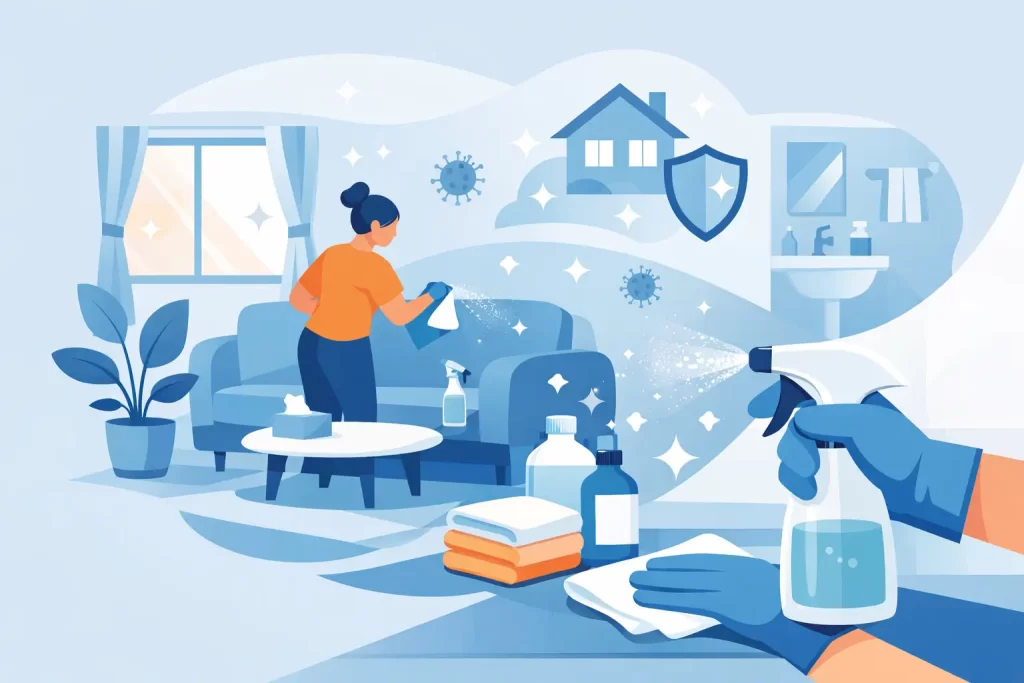
The sick room may be quiet again, but the cleanup can feel like one more job at the end of a long week. Home sanitizing after illness does not mean treating every inch of your house like a hospital. It means cleaning the areas where germs are most likely to linger, using products correctly, and restoring a comfortable space without creating extra stress for your household.
For most families, a focused approach works better than an all-day cleaning marathon. Start after the sick person is feeling better and has been fever-free as appropriate for their condition, then give extra attention to shared surfaces, linens, bathrooms, and frequently handled items.
Home Sanitizing After Illness Starts With Cleaning
Cleaning and disinfecting are related, but they are not the same task. Cleaning removes dirt, food residue, dust, and some germs from a surface. Disinfecting uses an EPA-registered product to kill certain germs listed on that product’s label. In many homes, cleaning high-touch areas thoroughly is the first priority, followed by disinfection where it makes sense.
A disinfectant cannot work well through visible grime. Wipe down a surface with soap and water or an appropriate household cleaner first, then apply disinfectant according to the label directions. Pay attention to the required contact time. Spraying a surface and immediately wiping it dry may not give the product enough time to do its job.
Use good ventilation when working with cleaning chemicals, especially in bathrooms and smaller apartments. Never mix bleach with ammonia, vinegar, or other cleaners. Combining products can release dangerous fumes, and more chemicals do not equal a cleaner home.
Focus on the Places Hands Touch Most
You do not need to disinfect every wall, cabinet, and piece of furniture. Start with the items that get frequent hand contact, particularly in shared spaces. These surfaces are easy to miss because they are part of daily routines.
Prioritize doorknobs, light switches, faucet handles, toilet flush levers, refrigerator handles, remote controls, phones, keyboards, bedside tables, and stair railings. In a family home, also clean commonly used toys, game controllers, and tablet screens according to manufacturer directions. For electronics, avoid soaking the surface and use a product that is safe for the device.
The bathroom deserves special attention after a stomach bug, flu, cold, or other contagious illness. Clean the toilet, sink, faucet, shower handles, bathroom counter, and floor around the toilet. Use separate cloths or disposable towels for the bathroom so you do not spread germs to kitchen counters or other rooms.
In the kitchen, wipe down counters, cabinet pulls, appliance handles, the kitchen table, and chair backs. If someone was ill with vomiting or diarrhea, be especially careful with food-preparation surfaces. Clean first, then disinfect with a product approved for that surface, and follow label instructions before using the area for food again.
Do Not Forget the Sick Room
If one person stayed mainly in a bedroom, begin there. Empty trash, remove used tissues, clean the nightstand and nearby handles, and wipe down items that were handled often. Open a window when weather and safety allow, or improve airflow with your home’s ventilation system.
There is usually no need to throw away pillows, blankets, or other personal items simply because someone was sick. Wash washable fabrics, clean hard surfaces, and use common sense. If an item cannot be cleaned and is visibly soiled, then replacement may be the better choice.
Handle Laundry Without Spreading the Mess
Bedding, towels, washcloths, pajamas, and clothing can be washed with other household laundry if they are not heavily soiled. Avoid shaking items before they go into the washer, since that can spread particles into the air. Carry laundry directly to the machine when possible.
Use the warmest water setting that is safe for the fabric and dry items completely. Clean the laundry hamper if it held soiled linens, especially after a stomach illness. If you use reusable cleaning cloths, wash them separately from clothing on a suitable hot cycle after the job is finished.
For a small spill or accident, wear disposable gloves if available. Remove visible material with paper towels, clean the affected area, then disinfect based on the product label. Bag used paper towels before placing them in the trash, remove gloves carefully, and wash your hands thoroughly afterward.
When to Clean More Carefully
The right level of cleaning depends on the illness and the people in your household. A routine respiratory cold may call for extra attention to high-touch surfaces and linens. Stomach illnesses often require more thorough bathroom and laundry cleaning because they can spread easily through contaminated hands and surfaces.
Take additional care if your home includes an infant, an older adult, someone with a weakened immune system, or someone recovering from surgery. In these cases, it can be reasonable to clean shared spaces more frequently for a few days and avoid sharing towels, drinks, utensils, or personal devices.
That said, there is a trade-off. Constantly disinfecting every surface can be unnecessary, expensive, and irritating to the skin or lungs when strong products are used too often. Consistent handwashing, proper cleaning of high-touch areas, safe laundry handling, and adequate ventilation are often more useful than aggressive chemical use throughout the house.
A Room-by-Room Reset Makes the Job Manageable
Trying to sanitize the whole home at once is where many people get stuck. Work in a simple order: bedrooms, bathrooms, kitchen, then shared living areas. Move from cleaner spaces to dirtier ones, and save the bathroom floor and toilet area for last.
Bring a small set of supplies with you so you are not walking back and forth: gloves, trash bags, microfiber cloths, an all-purpose cleaner, a disinfectant appropriate for the surfaces you are treating, and clean laundry bags or baskets. Change cloths when moving from the bathroom to another room. A cloth that cleaned the sink should not be used on a dining table.
After surfaces are handled, vacuum or sweep floors and mop hard flooring as needed. This is less about killing every germ and more about getting the home back to the clean, pleasant condition everyone wants after being cooped up indoors. Fresh bedding, an emptied trash can, and a clean bathroom can make a noticeable difference in how a home feels.
When Professional Help Is Worth It
Sometimes the challenge is not knowing what to clean. It is finding the time and energy to do it after caring for a sick child, recovering yourself, or keeping up with work. A professional one-time cleaning can be a practical option when the home has fallen behind, several family members were sick, or you want a complete reset before returning to your normal routine.
A dependable cleaning team can handle the detailed work that is easy to postpone: bathrooms, kitchen surfaces, dusting, floors, trash removal, and the general cleaning that helps your space feel comfortable again. If you hire help, communicate clearly about the areas that need extra attention and make sure the provider uses appropriate cleaning practices for your home.
JPR Cleaning provides professional residential cleaning for New Jersey homeowners and apartment residents who need a clean, healthy space without adding another major task to their week. A trained, insured, and bonded team can help restore order when your household is ready to move past illness.
Once the cleaning is done, keep the reset simple. Wash hands often, replace or wash frequently used towels, wipe down shared high-touch surfaces for the next few days, and let the home return to normal. A clean space will not erase a difficult week, but it can give your family a healthier, more comfortable place to recover.