
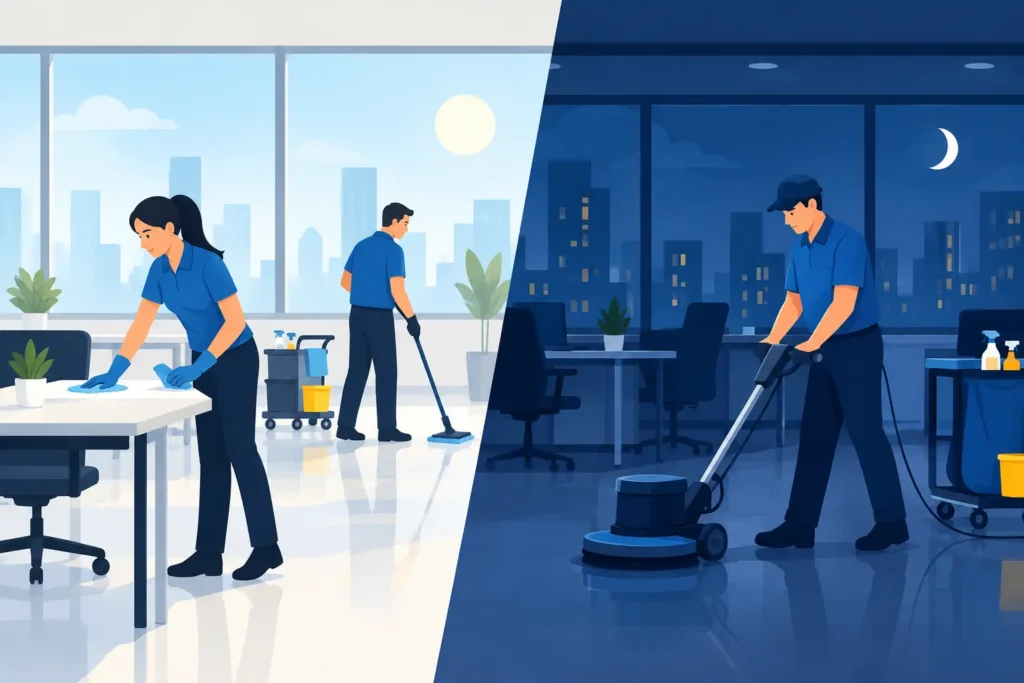
A restroom that looks fine at 8 a.m. can be out of paper towels, low on soap, and visibly untidy by noon. That is where the decision between day porter versus nightly cleaning becomes more than a scheduling detail. For offices, retail stores, medical-adjacent spaces, and other busy workplaces, the right cleaning plan affects customer confidence, employee comfort, health, and daily operations.
Nightly cleaning is the right choice for many businesses. A day porter is the better fit for others. In some cases, the strongest option is a combination of both. The goal is not to buy more service than you need. It is to maintain a consistently clean, healthy, and professional space at the times people actually use it.
What Is Nightly Cleaning?
Nightly cleaning takes place after your business closes or when the building is empty. A professional cleaning team handles the larger, more detailed work that is difficult to complete while employees or customers are present.
A typical nightly cleaning service may include vacuuming and mopping floors, sanitizing restrooms, removing trash, cleaning break rooms, wiping touchpoints, dusting accessible surfaces, and straightening common areas. The work happens without interrupting phone calls, meetings, customer service, or sales activity.
For a standard office with steady but manageable traffic, this schedule often provides excellent value. Employees arrive to a clean workspace each morning, and management does not need to coordinate cleaning around the workday. It also gives cleaners the time and access needed to complete tasks thoroughly.
Nightly service is especially practical when your business has predictable traffic, several restrooms that do not see heavy use, and no major messes during normal hours. A smaller professional office, accounting firm, law office, or appointment-based business may only need cleaning after closing to maintain a polished environment.
Where Nightly Cleaning Has Limits
A nightly crew cannot respond to what happens at 11 a.m. If a customer spills a drink in a retail aisle, a restroom runs out of supplies, or the lobby floor becomes wet during a rainy day, that issue remains until the next scheduled visit unless someone on your staff handles it.
This does not make nightly cleaning inadequate. It simply means the service is designed for end-of-day reset, not real-time upkeep. Businesses that receive frequent visitors may find that a spotless morning appearance fades before the day is over.
What Does a Day Porter Do?
A day porter works during business hours, usually on a set schedule or assigned shift. Their role is to keep public-facing and high-use areas presentable throughout the day. Rather than performing only a full after-hours clean, a porter focuses on ongoing attention where it matters most.
Day porter duties vary by facility, but they commonly include restroom checks and restocking, spot-cleaning floors, removing trash, wiping fingerprints from entry doors, refreshing lobbies, maintaining break rooms, and responding to spills. In a retail location, a porter may also help keep fitting rooms, checkout areas, and aisles neat. In an office, they can maintain conference rooms between meetings and keep shared spaces from becoming cluttered.
The visible benefit is immediate. Visitors see a business that looks cared for at 10 a.m., 2 p.m., and 5 p.m., not just at opening time. Employees also spend less time dealing with cleaning distractions or searching for basic restroom supplies.
A trained day porter supports safety as well as appearance. Quick attention to wet floors, overflowing trash, and high-touch surfaces can reduce avoidable hazards and help create a cleaner workplace for everyone.
Where Day Porter Service May Not Be Necessary
A full-time porter is not automatically the best answer for every location. If your office has limited visitor traffic, a small team, and lightly used common areas, the cost may not match the need. In that case, reliable nightly cleaning with occasional daytime support may be a more sensible arrangement.
Day porter service also needs clear expectations. A porter can keep a facility orderly, but they are not a substitute for the deeper cleaning that floors, restrooms, kitchens, and workspaces require. Without a regular after-hours cleaning plan, day-to-day touch-ups can become a patchwork solution instead of a complete maintenance program.
Day Porter Versus Nightly Cleaning: The Key Differences
The main difference is timing, but the practical difference is purpose. Nightly cleaning restores the building after use. Day porter service protects the building’s appearance while it is being used.
Nightly cleaning is generally more task-focused and thorough. It gives a cleaning crew uninterrupted time to complete routine janitorial work across the facility. Day porter service is more responsive. It places cleaning support on site during the moments when employees and customers are forming impressions of your business.
Cost can differ as well. Nightly cleaning is often priced around the size of the building, the cleaning frequency, and the work required. Day porter service may be priced by shift length, hours of coverage, or the level of staffing needed. A porter who is present all day naturally requires a larger service investment than a crew that cleans after closing.
The right comparison is not only hourly cost. Consider the cost of poor presentation. If customers regularly encounter dirty restrooms, full trash cans, streaked glass doors, or messy common areas, the business may lose trust long before anyone raises a complaint. For customer-facing operations, that impact can outweigh the savings of a minimal cleaning schedule.
How to Decide What Your Facility Needs
Start by looking at what happens between cleanings. If your space still looks professional at closing and staff can easily handle minor needs, nightly cleaning may be enough. If complaints, supply shortages, spills, or visible messes develop during the day, daytime support deserves serious consideration.
Your traffic pattern matters more than square footage alone. A small retail store with constant foot traffic may need a day porter more than a larger office with thirty employees and few visitors. Likewise, an office that hosts clients, interviews candidates, or conducts frequent meetings may benefit from daytime attention in the lobby, restrooms, and conference rooms.
Think about these operating realities:
- How many employees, customers, patients, or visitors use the space each day?
- Are restrooms, break rooms, entrances, or waiting areas heavily used?
- Does your business open during weather conditions that bring in rain, salt, mud, or debris?
- Are employees being pulled away from their actual jobs to address cleaning needs?
- Would a visible mess create a safety concern or damage customer trust?
The answers often point to a clear service level. A quiet office may need three or five nightly cleanings per week. A busy showroom may need nightly cleaning plus a porter for the busiest hours. A high-traffic facility may require a dedicated porter shift along with a detailed evening service.
Consider a Hybrid Cleaning Plan
For many New Jersey businesses, the best choice is not day porter versus nightly cleaning as an either-or decision. It is a plan that combines both services in the right proportion.
For example, a retail business might schedule nightly cleaning to vacuum, mop, sanitize restrooms, and clean employee areas. During the day, a porter can maintain the entryway, handle spill response, restock restrooms, and keep customer areas presentable. This approach gives the business both depth and responsiveness.
An office may not need a porter every day. It could benefit from daytime service only on high-traffic days, during events, or when client meetings are scheduled. That flexibility helps control costs while ensuring your workplace reflects the professional standards your customers expect.
Choose Reliability, Not Just a Cleaning Schedule
Whether you select daytime support, after-hours cleaning, or both, the quality of the cleaning partner matters. Your provider should understand your facility, communicate clearly, show up consistently, and use professionally trained staff who can work respectfully around employees, customers, and confidential business environments.
Ask for a service plan that identifies cleaning frequency, daytime responsibilities, restocking expectations, priority areas, and how urgent issues are handled. A licensed, insured, and bonded cleaning company provides added reassurance when you are trusting a team with access to your workplace.
JPR Cleaning helps businesses build practical cleaning plans around their actual hours, traffic, and facility needs. A free estimate can help you compare the cost of nightly service, porter coverage, or a combined schedule without guessing.
The cleanest choice is the one that keeps your business ready when people walk through the door – not merely when the cleaners have finished for the night.
Pingback: Retail Store Cleaning Guide for Better First Impressions - JPR Cleaning
Pingback: Office Cleaning Company Review: What to Check - JPR Cleaning