
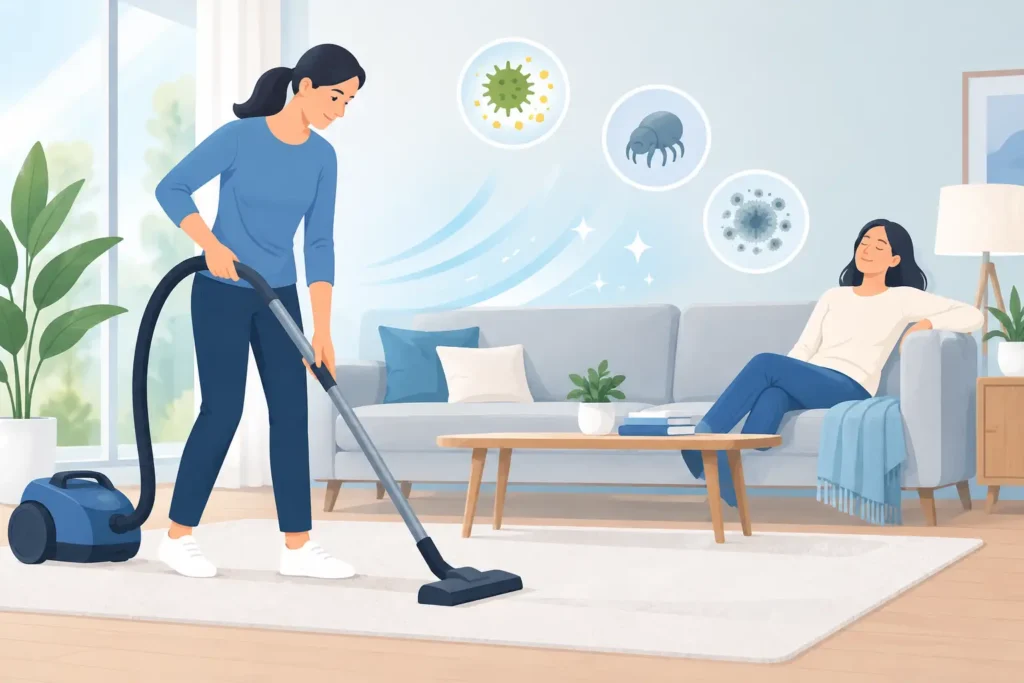
A stuffy nose that starts after you sit on the couch, itchy eyes while making the bed, or a cough that lingers at the office can point to more than seasonal pollen. Indoor allergens often settle into the places people use every day: carpets, upholstery, bedding, floors, vents, and overlooked corners. So, can cleaning reduce allergy symptoms? Often, yes. Consistent, targeted cleaning can lower the amount of common allergens in a space, helping many people feel more comfortable at home or work.
Cleaning is not a cure for allergies, and it cannot replace advice from a doctor or allergist. It can, however, remove or reduce the particles that keep triggering symptoms. The difference comes down to cleaning the right areas, using the right methods, and keeping up with the work before buildup returns.
Can Cleaning Reduce Allergy Symptoms?
Allergies happen when the immune system reacts to substances that are normally harmless. Inside a home or business, those substances may include dust mite debris, pet dander, pollen, mold spores, and cockroach particles. These allergens are small, easily disturbed, and often invisible. They can collect quietly even in a room that looks reasonably clean.
Cleaning reduces exposure by physically removing particles from surfaces and fabrics. Vacuuming a rug can pull debris from the fibers. Damp-wiping hard surfaces captures dust instead of sending it back into the air. Washing bedding removes sweat, skin flakes, and dust mite material that builds up where people sleep.
Results vary. Someone whose symptoms are mainly caused by pollen may notice relief after floors and entryways are cleaned more regularly. A person with a serious pet allergy may still react in a home with animals, even with excellent housekeeping. If mold is growing behind a wall or moisture is entering through a damaged roof, surface cleaning alone will not solve the underlying problem.
The Areas That Matter Most
A practical allergy-focused cleaning routine starts with the spaces that hold the most dust and are used the most. Bedrooms deserve special attention because people spend hours there with their face close to pillows, sheets, and mattresses. Wash sheets and pillowcases regularly in hot water when the fabric allows it, and do not forget blankets, comforters, and washable mattress covers.
Carpets, area rugs, upholstered furniture, and curtains can hold dust, pet dander, and pollen long after they enter the building. Vacuum slowly and thoroughly, especially along baseboards, under furniture, and in the pathways where people walk most often. A vacuum with strong filtration is helpful because it is less likely to release fine particles back into the room.
Hard surfaces need more than a quick dry dusting. Use a damp microfiber cloth on shelves, window sills, blinds, ceiling fan blades, and furniture. Dry feather dusters can move allergens into the air, which may make symptoms worse while cleaning is underway.
Kitchens and bathrooms matter for a different reason: moisture and food residue can create conditions that support mold or attract pests. Wipe up spills promptly, clean sinks and counters, empty trash, and pay attention to moisture around toilets, tubs, refrigerators, and under-sink plumbing. If you find recurring mold, a musty odor, or signs of a leak, arrange for the source of the moisture to be repaired.
Cleaning Methods That Can Help, Not Stir Things Up
The goal is to capture allergens, not simply move them around. Start from high surfaces and work downward so dust from shelves and fans lands on floors that will be vacuumed or mopped later. Use a damp microfiber cloth rather than a dry rag for dusting, and follow with a vacuum or damp mop.
For floors, the right approach depends on the material. Carpet benefits from regular, careful vacuuming. Hardwood, tile, vinyl, and laminate floors should be vacuumed or swept gently first, then damp-mopped according to the manufacturer’s care instructions. Soaking floors is unnecessary and can create moisture problems, particularly around seams and baseboards.
Be thoughtful with fragranced sprays and harsh chemical products. They may leave a fresh scent, but fragrance and fumes can irritate some people with allergies, asthma, or chemical sensitivities. A clean space does not need to smell heavily perfumed to be clean. Products should be used as directed, and rooms should have adequate ventilation.
If someone in the household is highly sensitive to dust, it may help for that person to stay out of the room while heavy cleaning is done and until airborne particles have settled. For deep carpet cleaning or detailed dust removal, professional service can also take the work off the shoulders of the person experiencing symptoms.
A Routine That Works for Real Life
Allergen control is more effective when it is consistent. Waiting until dust is visible usually means particles have already collected in fabrics and on surfaces. A regular schedule keeps the workload manageable and reduces the chance that a busy month turns into a major cleanup.
Weekly attention to floors, dusting, kitchen surfaces, bathrooms, and bedding is a solid foundation for many homes. Homes with pets, young children, wall-to-wall carpet, or high pollen exposure may need more frequent vacuuming and entryway cleaning. During peak pollen periods, taking shoes off at the door and cleaning around entrances can limit what gets tracked indoors.
Monthly or seasonal tasks deserve a place on the calendar as well. These include vacuuming upholstery, washing curtains when care labels permit, cleaning behind and under furniture, wiping vents and registers, and checking windows for condensation or water damage. Air filters should be changed on the schedule recommended for the system and filter type.
Don’t Overlook the Workplace
Offices, retail spaces, waiting rooms, and break rooms can collect allergens just as quickly as homes. In fact, high foot traffic brings in outdoor pollen, dirt, and debris throughout the day. Fabric office chairs, carpeted work areas, dusty blinds, and neglected corners can affect employee comfort and the impression a business makes on visitors.
A dependable commercial cleaning plan supports a healthier, more pleasant workplace. Regular floor care, detailed dusting, restroom cleaning, trash removal, and attention to shared surfaces all help reduce the buildup that employees and customers encounter. For businesses, consistency matters as much as the individual cleaning task. A clean lobby on Monday should not become a dusty, cluttered space by Thursday.
When Cleaning Is Not Enough
Cleaning helps manage exposure, but some allergy concerns need another solution. Persistent mold, active pests, water damage, damaged ductwork, poor ventilation, or a leaking pipe should be addressed by the appropriate professional. Covering up an odor with a spray or repeatedly wiping a stain does not remove the source.
Medical care is also appropriate when symptoms are frequent, severe, or interfering with sleep, work, or school. Wheezing, shortness of breath, facial swelling, or a severe asthma flare require prompt medical attention. An allergist can help identify specific triggers, which makes it easier to focus cleaning efforts where they will have the greatest effect.
For families and businesses that need dependable help maintaining a cleaner environment, JPR Cleaning provides professional residential and commercial cleaning with trained staff and a focus on consistent results. A recurring service can be especially useful when the goal is to prevent buildup rather than scramble to clean after symptoms become frustrating.
A cleaner room cannot control every allergen outside your door, but it can give those allergens fewer places to settle inside. Start with the bedroom, floors, and high-touch living areas, then build a routine you can maintain. Small, regular improvements often make a space feel noticeably more comfortable to live and work in.
Pingback: Post Construction Cleaning Guide for New Spaces - JPR Cleaning