
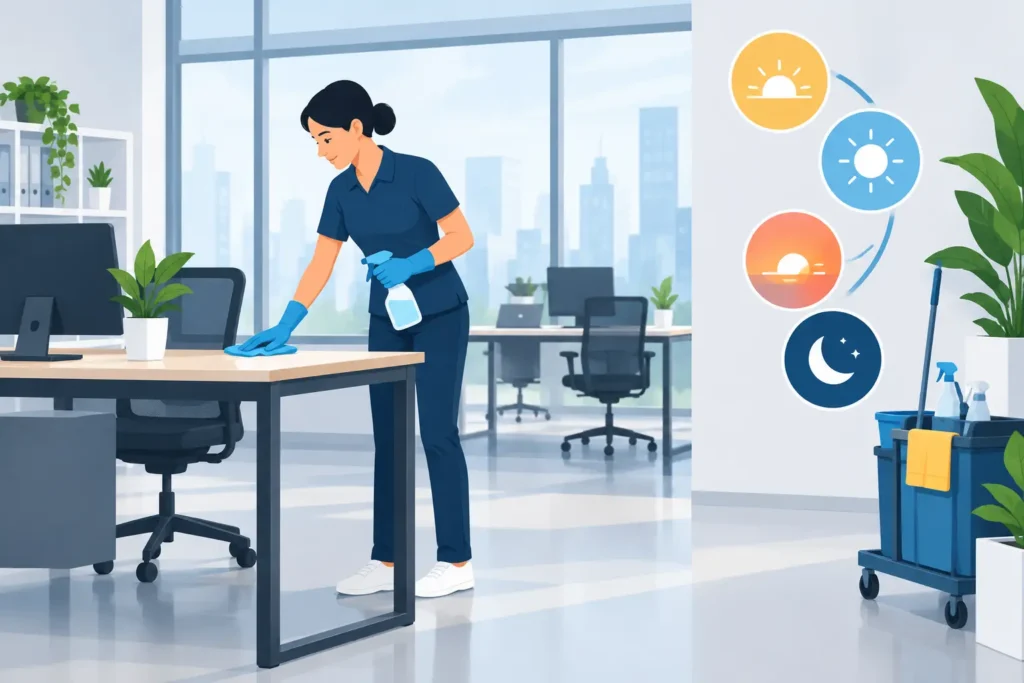
A clean office is noticed before anyone says a word. Employees feel more comfortable at their desks, visitors see a business that pays attention to details, and high-touch areas are less likely to spread germs. So, when should offices be cleaned? For most businesses, the right answer is not simply once a week. It is a schedule built around your staff size, customer traffic, workspace layout, and the type of work happening each day.
A busy office with shared restrooms, a break room, and daily visitors needs more attention than a small private suite used by three people. The goal is to keep the workplace consistently clean without paying for services that do not match your actual needs.
When Should Offices Be Cleaned During the Week?
Most offices benefit from professional cleaning after business hours, when desks, walkways, restrooms, and shared spaces are empty. Evening cleaning allows your team to arrive the next morning to a fresh, organized space without interrupting calls, meetings, or customer service.
For offices that operate overnight or have flexible schedules, cleaning can be arranged during the quietest part of the day. The best time is one that gives cleaning staff full access while causing the least disruption to your employees and customers.
Frequency matters just as much as timing. A practical office cleaning schedule usually includes daily attention to high-use areas, regular weekly detail work, and periodic deep cleaning for the areas that collect dirt slowly but steadily.
Daily cleaning for high-traffic areas
Restrooms, break rooms, entrances, reception areas, and shared touchpoints should be cleaned daily in most workplaces. These are the spaces that affect both health and first impressions. Trash builds up quickly, floors show tracked-in debris, and surfaces such as door handles, refrigerator handles, elevator buttons, and shared equipment are touched throughout the day.
Daily service is especially valuable for offices with 15 or more employees, customer-facing reception areas, medical or professional waiting rooms, or teams that share desks and equipment. It is also a smart choice during cold and flu season, when routine disinfection helps support a healthier workplace.
A daily visit does not have to mean every corner of the office receives the same level of work. A trained cleaning team can focus on the areas that need it most: emptying trash, sanitizing restrooms, cleaning break room counters, vacuuming main walkways, mopping hard floors, and wiping high-touch surfaces.
Weekly cleaning for private workspaces
Individual offices, conference rooms, desk areas, and low-traffic storage spaces may only need a thorough cleaning once or twice a week. Dusting, vacuuming under accessible furniture, cleaning interior glass, and wiping surfaces can be scheduled around how often each area is used.
A small office with limited visitors may be well served by weekly professional cleaning, provided employees handle small daily tasks such as clearing food from desks and placing trash in bins. This approach can control costs while still maintaining a professional environment.
The trade-off is simple: less frequent cleaning may work in a quiet office, but it can quickly fall short when employees share common spaces or clients visit regularly. If restrooms look worn by midweek or the break room is consistently messy, the schedule needs to be adjusted.
How Office Type Changes the Cleaning Schedule
There is no one-size-fits-all answer to when offices should be cleaned. The right plan depends on how people use the building.
A traditional administrative office may need cleaning two to five nights per week, depending on employee count. A law firm, accounting office, or consulting business with scheduled client meetings often benefits from more frequent reception and restroom care, even if its overall foot traffic is moderate.
Medical offices, dental practices, and wellness facilities generally require more frequent and more specialized cleaning because sanitation expectations are higher. Retail offices and businesses with public showrooms also need regular floor care, glass cleaning, and restroom attention because customers form an opinion quickly based on what they see.
Coworking spaces, call centers, and busy sales offices often need daily service. Shared desks, crowded break rooms, and frequent visitors create more waste, more fingerprints, and more opportunities for germs to spread. In these settings, skipping days can be obvious by the end of the week.
Remote and hybrid schedules can change the equation. If only a portion of your team is onsite on certain days, it may make sense to schedule service after the busiest days rather than paying for the same frequency every night. A dependable cleaning company should help you build a plan around your real occupancy, not a generic package.
Signs Your Office Needs More Frequent Cleaning
Office managers often know the cleaning schedule is not working before they can explain why. Complaints about restrooms, overflowing trash, sticky break room counters, dusty furniture, or stained entry floors are clear signs that the service frequency should increase.
Other warning signs are less obvious. A lingering odor in a trash area, dull floors, smudged glass at the entrance, and supplies that run out before the next service can all make a workplace feel poorly maintained. These details matter because employees and visitors notice them, even when they do not mention them directly.
If your team is spending work time wiping down shared spaces, taking out trash, or cleaning up after meetings, professional cleaning may not be happening often enough. Employees should be able to maintain their personal work areas, but they should not have to carry the burden of keeping common spaces presentable.
Do Not Wait for a Deep Cleaning Emergency
Deep cleaning is an important part of office care, but it should not be treated as a rescue service after months of neglect. Carpets, baseboards, vents, blinds, upholstery, and hard-to-reach corners need periodic attention because dust and soil build up gradually.
Most offices should plan a deeper cleaning every three to six months. High-traffic spaces may need it more often, particularly after winter weather, renovation work, a company event, or a busy season that brings more people through the building.
Seasonal cleaning can also address tasks that are not necessary every visit, such as detailed floor treatment, interior window cleaning, high dusting, and cleaning behind appliances in break rooms. Scheduling these services proactively helps protect flooring and furnishings while keeping the office from looking tired.
Build a Schedule Around Health, Appearance, and Budget
The best office cleaning schedule balances three priorities: a healthy environment, a professional appearance, and a service plan that fits your budget. Daily cleaning is not necessary for every business, but every business needs a reliable standard for restrooms, trash, floors, and shared surfaces.
Start by looking at your busiest days, the spaces employees use most, and the areas customers see first. Then consider whether your current schedule keeps those areas clean through the end of the workday. If it does not, more frequent service is usually less costly than the damage caused by poor presentation, employee frustration, or avoidable workplace illness.
A professional cleaner can also tailor the scope of each visit. For example, an office may need restrooms and break rooms serviced daily, while workstations and conference rooms receive detailed care twice a week. This targeted approach keeps standards high without treating every room exactly the same.
Choose a Cleaning Partner You Can Trust
Office cleaning requires more than a mop and a trash bag. It requires reliable staff, consistent procedures, respect for your workspace, and clear communication when your needs change. Your cleaning team may work after hours and around sensitive business materials, so trust and accountability should be part of the decision.
JPR Cleaning provides professional office cleaning designed around the way your business operates. With trained staff and the reassurance of being licensed, insured, and bonded, the focus stays where it belongs: a clean, healthy, pleasant workplace your employees and customers can feel good about.
If you are unsure whether your office needs daily, weekly, or customized service, walk through the space at the end of your busiest day. The condition of the restrooms, floors, break room, and entryway will usually give you the answer – and a clear starting point for a better cleaning plan.