
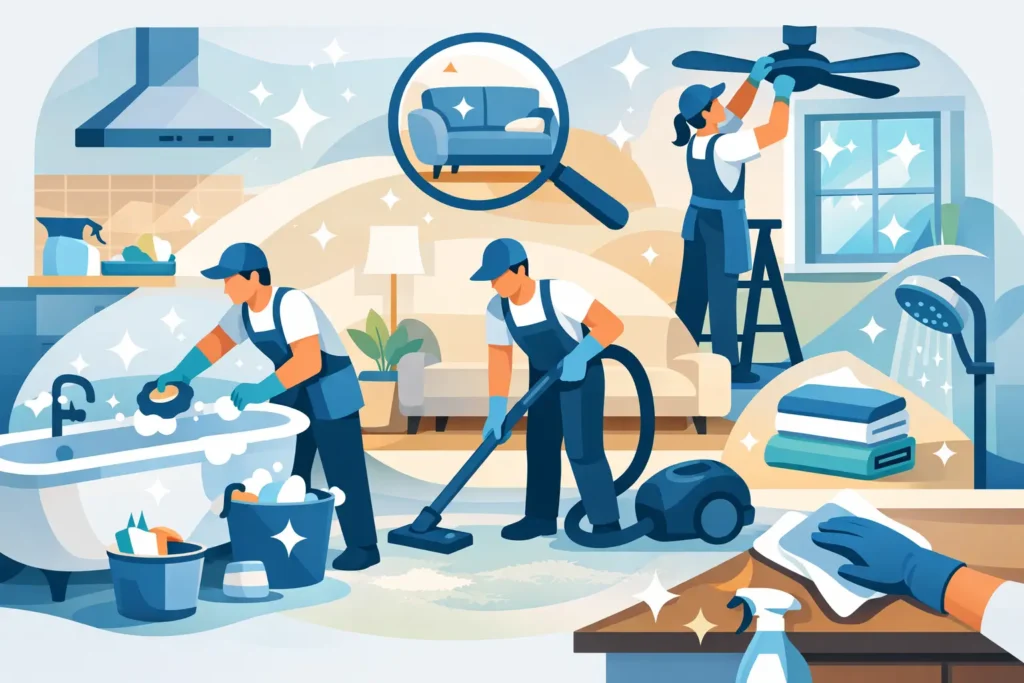
A home can look picked up and still need serious attention. Dust settles behind furniture, grease builds up near the stove, soap film dulls bathroom fixtures, and high-touch surfaces collect everyday residue. If you are asking what does deep cleaning include, the simple answer is detailed work that goes beyond the routine cleaning needed to keep a space presentable week to week.
A professional deep clean focuses on the areas that are easy to miss when time is limited. It is a practical choice before starting recurring service, moving into a new home, hosting guests, recovering from a busy season, or simply getting your space back to a healthier, more comfortable standard.
What Does Deep Cleaning Include?
Deep cleaning usually includes the regular tasks you expect, such as vacuuming, mopping, dusting accessible surfaces, and cleaning bathrooms and kitchens. The difference is the level of detail. A trained cleaning team spends more time removing buildup, reaching neglected areas, and cleaning fixtures, surfaces, and edges that are not normally addressed during a standard visit.
The exact scope depends on the size and condition of the home, whether rooms are furnished, and the cleaning company’s service checklist. That is why a clear estimate matters. You should know which rooms are included, whether interior appliances are part of the service, and which jobs may require an add-on or extra time.
Detailed kitchen cleaning
The kitchen is often the most labor-intensive part of a deep clean because it combines food residue, grease, crumbs, fingerprints, and high-touch surfaces. A thorough service commonly includes wiping cabinet exteriors, cleaning countertops and backsplashes, polishing the sink and faucet, and wiping the outside of appliances.
Attention is also given to the stovetop, microwave exterior and interior when included, range hood exterior, and the area around appliance handles. Floors are vacuumed or swept and mopped carefully, including corners and along baseboards where crumbs tend to collect.
Interior oven and refrigerator cleaning are not always included in a standard deep-cleaning package. These tasks take additional time and may need to be requested in advance. If a spotless oven or refrigerator is important for your appointment, ask about it when requesting your estimate rather than assuming it is covered.
Bathroom buildup removal
Bathrooms need more than a quick wipe-down when soap scum, hard-water spots, and dust have had time to build up. Deep cleaning generally covers scrubbing the tub, shower walls, shower doors, toilet, sink, vanity, and faucets. Mirrors are cleaned, and visible residue is removed from fixtures and surrounding surfaces.
A detail-oriented team also addresses the base of the toilet, exterior cabinet surfaces, light switch plates, and bathroom floors. Grout can be cleaned as part of normal shower and floor care, but permanently stained or discolored grout may not return to its original color. Cleaning removes surface buildup, while repairs, regrouting, and mold remediation are separate services.
Bedroom and living-area detail work
In bedrooms, living rooms, hallways, and other common areas, deep cleaning brings attention to the surfaces and edges that routine service may address less often. This can include dusting window sills, blinds, doors, door frames, baseboards, ceiling fans, vents, and light fixtures that can be safely reached.
Furniture is dusted and vacuumed around when accessible. Floors receive detailed vacuuming and mopping as appropriate for the material. Cobwebs are removed from corners, and fingerprints or marks may be wiped from doors, switches, and other reachable surfaces.
Moving every heavy sofa, bed, or cabinet is not usually part of a deep cleaning appointment. Large furniture can be difficult to move safely and may scratch floors or cause damage. If you want a particular area cleaned behind, moving lightweight items before the team arrives can help them work more efficiently.
Edges, touchpoints, and overlooked surfaces
The value of a deep clean often shows up in the small details. Baseboards, door frames, window ledges, stair rails, outlet covers, cabinet pulls, and light switches all collect dust and marks over time. These are the surfaces that make a room feel truly refreshed after professional cleaning.
High-touch areas are also a priority in homes with children, pets, frequent guests, or multiple family members. Cleaning removes visible soil and everyday residue from these surfaces. If you need disinfection for a specific health-related reason, discuss that need with the cleaning provider so the appropriate products, dwell times, and procedures can be confirmed.
Deep Cleaning vs. Standard Cleaning
Standard cleaning is designed for maintenance. It keeps kitchens, bathrooms, floors, and commonly used surfaces in good shape on a recurring schedule. It is the service that helps prevent a home from reaching the point where dirt and clutter feel overwhelming.
Deep cleaning is more intensive and generally takes longer. It handles accumulated dust, grease, soap residue, and detail work that a regular visit may not have time to cover. Many customers choose a deep clean before beginning weekly, biweekly, or monthly service so the home starts from a clean baseline.
Neither option is automatically better. A consistently maintained home may only need standard cleaning, while a home that has gone several months without professional care may benefit from a detailed first visit. The best choice depends on the condition of the space, your household routine, and your expectations for the appointment.
What Deep Cleaning May Not Include
A deep clean is comprehensive, but it is not the same as restoration, repair, or specialty remediation. Understanding the limits of the service prevents surprises and helps you request the right kind of help.
Deep cleaning does not typically include removing hazardous waste, treating active mold problems, washing exterior windows, steam-cleaning carpets, hauling away large amounts of clutter, or repairing damaged surfaces. Heavy construction dust, excessive pet waste, pest infestations, and severe smoke or odor issues may require specialized equipment or a separate service plan.
It also does not guarantee the removal of every stain, scratch, mineral deposit, or discoloration. Some marks have permanently changed a material’s finish. A professional cleaning team can improve the appearance of many surfaces, but honest expectations are part of good service.
How to Prepare for a Deep Cleaning Appointment
You do not need to clean before professional cleaners arrive, but a little preparation gives the team more time to focus on the actual cleaning. Put away personal items, paperwork, laundry, and small objects from counters and floors. Clear bathroom vanities and kitchen countertops if you want those surfaces cleaned thoroughly.
Let the company know about pets, parking instructions, building access, alarm systems, fragile items, and rooms that should not be entered. If you have preferred products or sensitivities to fragrance, communicate that before the appointment. For a move-in or move-out cleaning, confirm whether utilities such as water and electricity will be available.
Be specific about your priorities. Maybe the kitchen needs the most attention, the shower doors have persistent buildup, or you want the baseboards addressed throughout the home. Clear communication lets the cleaning team plan the time and supplies needed for your space.
Deep Cleaning for Offices and Retail Spaces
The same detailed approach matters in a workplace. Offices and retail locations need clean restrooms, break rooms, floors, glass, touchpoints, and customer-facing areas to support a professional appearance. A deep clean can be especially useful before an opening, after a busy season, following an office reorganization, or before setting up recurring commercial service.
For businesses, the scope should reflect how the space is used. A retail store may prioritize entry glass, fitting rooms, display areas, and restrooms. An office may need more attention in shared kitchens, conference rooms, workstations, and high-traffic floors. A reliable provider should review the space and create a clear plan rather than offering a one-size-fits-all promise.
A deep clean should leave your home or business feeling cared for, not uncertain about what was done. JPR Cleaning provides clear, professional service for New Jersey homes and businesses, with trained staff and the reassurance of being licensed, insured, and bonded. Start by sharing the condition of your space and the areas that matter most, then request an estimate that matches the work you actually need.