
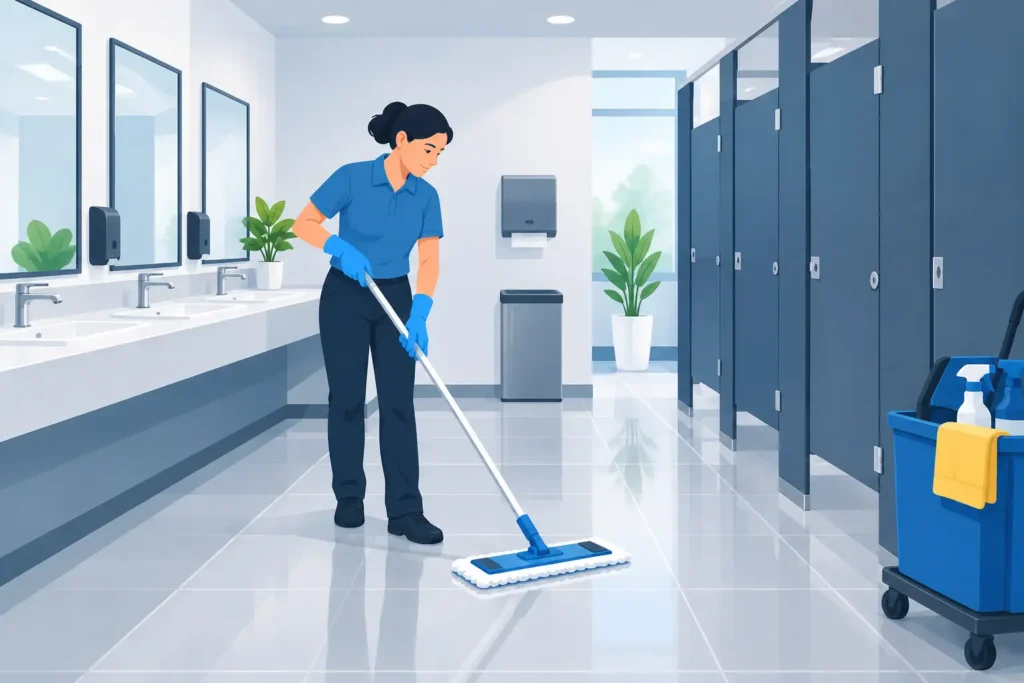
A restroom can shape a customer’s opinion of your business in less than a minute. Empty soap dispensers, a lingering odor, or a dirty floor can make an otherwise well-run office, store, or facility feel neglected. This commercial restroom cleaning guide explains how businesses can maintain a cleaner, healthier space while protecting their professional image.
Restroom cleaning is not simply about appearances. High-touch surfaces, moisture, and frequent traffic create the right conditions for germs, odors, and buildup. A consistent process helps protect employees and visitors, reduces complaints, and gives everyone more confidence in the workplace.
Commercial Restroom Cleaning Guide: Start With a Reliable Routine
The right cleaning schedule depends on foot traffic, business hours, restroom size, and the type of facility. A small office restroom used by a few employees may need a thorough daily cleaning and occasional touch-ups. A retail restroom, medical office, restaurant, gym, or customer-facing location may need attention several times a day.
The key is to avoid treating restroom cleaning as an occasional task. Waiting until a restroom looks dirty usually means customers and employees have already noticed the problem. A dependable routine keeps conditions under control before they affect comfort, health, or your business reputation.
A basic daily service should include cleaning and disinfecting toilets, urinals, sinks, faucets, flush handles, door handles, and other high-touch points. Mirrors should be polished, trash should be removed, and floors should be cleaned with close attention to corners and areas around fixtures. Restocking toilet paper, hand soap, paper towels, and feminine hygiene supplies is just as important as the cleaning itself.
For high-traffic locations, add regular daytime checks. These visits do not always require a full cleaning, but they should confirm that supplies are available, trash is under control, floors are dry, and there are no visible issues requiring immediate attention.
Clean First, Then Disinfect
A common mistake is spraying disinfectant over visible soil and assuming the surface is sanitary. Dirt, residue, and mineral buildup can reduce the effectiveness of disinfecting products. Cleaning and disinfecting are related, but they are not the same job.
Cleaning removes grime, soap scum, dust, and organic matter from a surface. Disinfecting uses an approved product to reduce germs on that already-clean surface. For the best result, staff should remove visible soil first, apply disinfectant according to the product label, and allow the required contact time before wiping or allowing the surface to air dry.
This matters most on touchpoints. Faucet handles, toilet flush levers, stall locks, light switches, grab bars, paper towel dispensers, and door handles should receive regular attention. These areas may look clean while still receiving constant hand contact throughout the day.
Use separate cloths, mop heads, and tools for restroom work whenever possible. Color-coding equipment can help prevent a cloth used near a toilet from being used on a sink, counter, or another area of the building. This simple control supports safer, more consistent cleaning.
Focus on the Areas Customers Notice Most
People may not inspect every surface, but they notice certain details immediately. Floors, mirrors, sinks, toilets, odor, and supply levels carry the most weight. If any one of these fails, the overall restroom experience suffers.
Floors deserve special attention because they collect water, paper debris, hair, and dirt tracked in from outside. Wet floors also create a safety concern. Clean them thoroughly, place wet-floor signs during service, and inspect the area around toilets and sinks for splashing or leaks.
Mirrors and chrome fixtures should be free of streaks, fingerprints, and water spots. A clean mirror makes the entire room feel more maintained, while a dirty one can make even a recently cleaned restroom look unfinished.
Toilets and urinals require more than a quick wipe. Clean the bowl, seat, lid, exterior surfaces, base, flush valve, and nearby wall areas. Urinals should be cleaned carefully to address mineral deposits and odor-causing buildup. If staining or odors return quickly, the issue may require a deeper cleaning approach or a plumbing inspection.
Control Odors at the Source
Air freshener can improve a restroom’s scent, but it cannot solve the source of an odor. Covering a problem with fragrance often makes the space feel worse. Persistent odors usually come from dirty floors, drains, trash, urinals, toilet bases, damp mops, or poor ventilation.
Start with thorough cleaning of fixtures and floors. Empty trash before it becomes overfilled, especially in restrooms with feminine hygiene receptacles. Check drains for buildup and make sure mop water and cleaning tools are not left in the room. If odor continues after a detailed cleaning, investigate for leaks, broken seals, ventilation issues, or plumbing concerns.
A neutral, clean smell is usually better than a strong fragrance. Some customers and employees are sensitive to scented products, so product selection should fit the environment. Medical offices, schools, and workplaces with close quarters may prefer low-odor or fragrance-free options.
Keep Supplies Stocked and Easy to Use
A clean restroom is still frustrating if there is no soap, toilet paper, or way to dry hands. Supply checks should be part of every service visit, not an afterthought. Set minimum levels for each dispenser so staff know when to refill rather than waiting for an item to run out.
Pay attention to dispenser condition as well. A broken soap dispenser, jammed paper towel unit, or empty air freshener dispenser can create a poor impression and cause unnecessary mess. Soap spills around dispensers should be wiped promptly because they can leave counters sticky and floors slippery.
For businesses with frequent public use, larger-capacity dispensers may reduce the number of refills needed each day. That trade-off can save labor, though it may not fit every restroom layout or design. The best setup is one that matches your traffic level and is simple for users to operate.
Use a Checklist, but Make It Practical
A restroom checklist creates accountability, especially when multiple people share cleaning responsibilities. It should confirm the essential work without becoming so long that it is ignored. Include the tasks that directly affect sanitation, appearance, safety, and supply availability.
A useful checklist can cover cleaning toilets and sinks, disinfecting touchpoints, emptying trash, restocking supplies, cleaning mirrors, mopping floors, and reporting maintenance concerns. For public restrooms, a log sheet can show when the room was last checked. This is helpful for managers and also gives visitors confidence that the space is actively maintained.
However, a checklist should never replace inspection. A team member can mark a task complete and still miss an overflowing trash can, a leaking toilet, or a strong odor. Training staff to notice the condition of the room is just as important as assigning tasks.
Train for Safety and Consistency
Commercial restroom cleaning involves chemical handling, wet floors, bodily fluid concerns, and cross-contamination risks. Staff should understand the products they use, including proper dilution, contact time, storage, and required personal protective equipment.
Never mix cleaning chemicals. Certain combinations can create dangerous fumes or damage surfaces. Products should stay in labeled containers, and safety data should be available to employees who use them. Gloves are standard for restroom work, and additional protection may be appropriate depending on the task and the facility’s policies.
Consistency comes from clear training and supervision. The goal is not just to make a restroom look acceptable for a few minutes. It is to deliver the same clean, healthy, professional result day after day.
Know When to Bring in Professional Help
Some businesses handle routine touch-ups internally but rely on a professional cleaning company for scheduled deep cleaning or complete restroom service. This can be a practical choice when staff are already busy serving customers, managing operations, or handling office responsibilities.
Professional cleaners can provide trained staff, appropriate equipment, and a structured schedule that reduces missed tasks. This is especially valuable for offices, retail spaces, and facilities where restroom conditions directly affect customer experience. The right provider should be reliable, insured, accountable, and willing to tailor service frequency to the building’s actual use.
JPR Cleaning helps New Jersey businesses maintain clean, healthy restrooms and professional workspaces with dependable commercial cleaning service. A restroom should never become the detail that makes customers question the care you put into your business.