
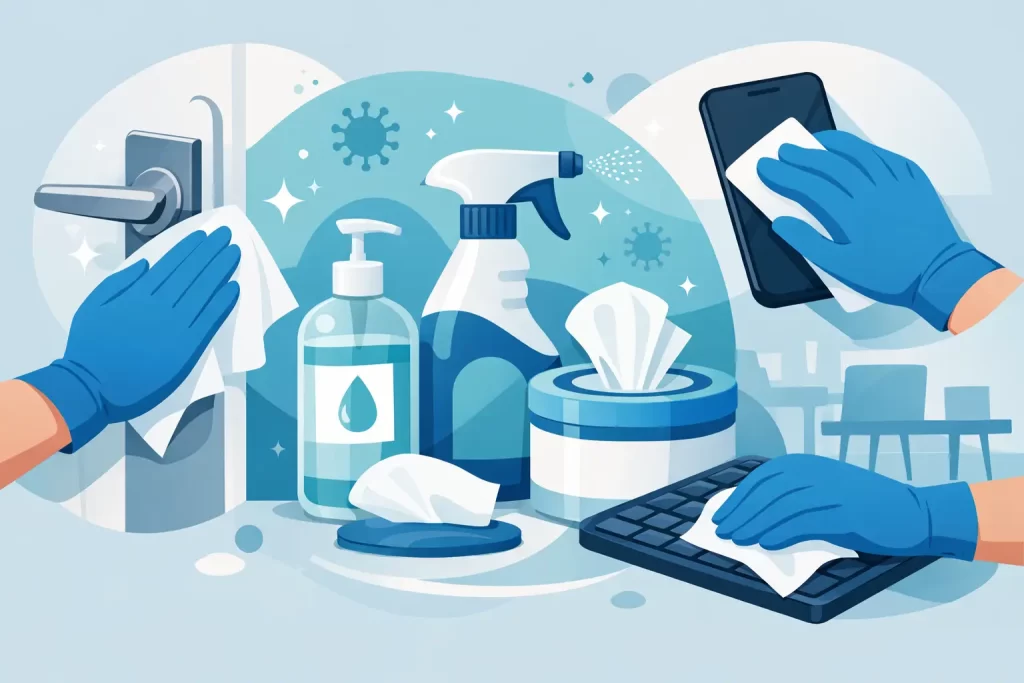
The surfaces people barely notice are often the ones that need the most attention. Door handles, refrigerator pulls, light switches, faucet levers, keyboards, and checkout counters can collect fingerprints all day. Knowing how to sanitize high touch surfaces helps protect the clean, healthy environment your family, employees, and customers expect.
The goal is not to spray every surface repeatedly or use the strongest product available. Good sanitation is a practical routine: remove visible soil, use the right product for the material, give it enough contact time, and focus on the places people actually touch.
Start by Identifying High-Touch Areas
High-touch surfaces vary by location. In a home, they are usually concentrated in kitchens, bathrooms, entryways, and shared living spaces. In an office or retail setting, they often include common areas, employee workstations, restrooms, customer-facing counters, and payment areas.
Walk through the space as the people who use it would. Notice what they grab, press, pull, or lean on during a normal day. A surface can look spotless and still receive constant hand contact.
Common high-touch surfaces include:
- Door knobs, handles, locks, and push plates
- Light switches, thermostat controls, and elevator buttons
- Faucet handles, toilet flush levers, and cabinet pulls
- Phones, keyboards, mice, touch screens, and remote controls
- Refrigerator handles, microwave buttons, and appliance controls
- Countertops, handrails, shared tables, and checkout terminals
The right frequency depends on traffic. A family bathroom may need daily attention, while a busy office entry door or retail payment terminal may need sanitizing several times throughout the day. More frequent cleaning is not always necessary in low-use rooms, but heavily shared spaces should never be an afterthought.
Clean First, Then Sanitize
One of the most common mistakes is applying sanitizer or disinfectant directly over dirt, food residue, grease, or visible grime. Products work best on a clean surface. If the area is dirty, wipe it first with soap and water or a suitable general-purpose cleaner.
Cleaning removes soil and reduces germs through physical removal. Sanitizing lowers the number of germs to a safer level. Disinfecting is intended to kill a broader range of germs, depending on the product and its label directions. For routine high-touch cleaning, sanitizing may be appropriate. In restrooms, break rooms, healthcare-adjacent spaces, or after illness, a disinfectant may be the better choice.
This distinction matters because stronger is not automatically better. Some disinfectants can damage finishes, irritate skin, leave residue, or create unnecessary fumes when used too often. Choose the product based on the surface, the setting, and the level of sanitation needed.
Choose the Right Product for the Surface
Read the label before using any sanitizer or disinfectant. It should state where the product can be used, what it is designed to do, whether it needs to be diluted, and how long the surface must stay wet. That last instruction, called contact time, is essential. Wiping a product away immediately may prevent it from working as intended.
For hard, nonporous surfaces such as counters, handles, and bathroom fixtures, an EPA-registered sanitizer or disinfectant is commonly used. For electronics, avoid spraying directly onto the device. Apply a product approved for electronics to a soft cloth, or use an appropriate wipe, while keeping moisture away from openings and ports.
Natural stone, unfinished wood, leather, and certain painted or coated surfaces require extra care. Harsh chemicals can dull finishes, discolor materials, or weaken protective coatings. When in doubt, test a small hidden area first and follow the manufacturer’s care instructions.
Never mix cleaning chemicals. Combining products such as bleach and ammonia can release dangerous fumes. Use one product at a time, work in a ventilated area, and keep chemicals in their original labeled containers.
How to Sanitize High Touch Surfaces Step by Step
A consistent process prevents missed spots and helps protect surfaces from unnecessary damage. Start by washing your hands or putting on gloves if the product label recommends them. Gather clean microfiber cloths or disposable wipes, your chosen cleaner, and your sanitizer or disinfectant.
First, remove crumbs, dust, residue, and visible soil. Then apply the sanitizing product according to its label. Make sure the entire surface is evenly wet, especially around edges, grooves, buttons, and handles where hands make regular contact.
Allow the product to remain wet for the full contact time listed on the label. Do not assume a quick spray-and-wipe is enough. Once the time has passed, let the surface air dry unless the product instructions say to rinse or wipe it dry.
Use a fresh side of the cloth or a new wipe as you move through the space. Reusing a soiled cloth from the bathroom on kitchen surfaces can spread contaminants instead of removing them. Color-coded microfiber cloths can make this easier in homes and workplaces: one color for restrooms, another for kitchens, and another for general surfaces.
For food-preparation areas, follow the product directions carefully. Some products require a potable-water rinse after use on surfaces that may touch food. This is especially important for restaurant prep areas, office kitchens, and household counters where meals are prepared.
Build a Routine That Fits Your Space
The best routine is one your household or team can maintain. A daily pass through high-touch areas makes a major difference without turning cleaning into an all-day project. Focus on the entryway, kitchen, bathrooms, and shared devices first.
Businesses should adjust the schedule around customer and employee traffic. A small office may sanitize common touchpoints in the morning, midday, and at closing. A busy retail business may need more frequent attention at entrances, counters, fitting rooms, and restrooms. If an employee or household member is sick, increase attention to shared surfaces and avoid sharing personal items whenever possible.
Keep supplies close to where they are used. A properly labeled cleaning caddy in the kitchen or janitorial closet makes it easier to handle small tasks before they become a bigger problem. For commercial spaces, a written checklist helps staff stay accountable across shifts and makes service expectations clear.
Do Not Forget the Details People Notice
Customers and guests may not see every cleaning step, but they notice the results. Smudged glass doors, sticky handles, dusty keypads, and dirty restroom fixtures can quickly affect how a home or business feels. High-touch cleaning supports health, but it also protects presentation and trust.
Pay close attention to areas around the surface itself. Clean the plate around a light switch, the edge of a door where hands push it open, the base of a faucet, and the space beneath a counter-mounted payment device. These details often hold buildup that a quick wipe misses.
Professional cleaning can also help maintain consistency when schedules are full or traffic is high. JPR Cleaning provides dependable residential and commercial cleaning designed to keep the spaces people use every day clean, healthy, and welcoming.
A well-sanitized space does not need to smell heavily of chemicals or look like it has been overtreated. It should simply feel cared for: clean handles, clear counters, fresh restrooms, and fewer overlooked touchpoints. Set a routine that matches your traffic, use products correctly, and give the surfaces people rely on every day the attention they deserve.