
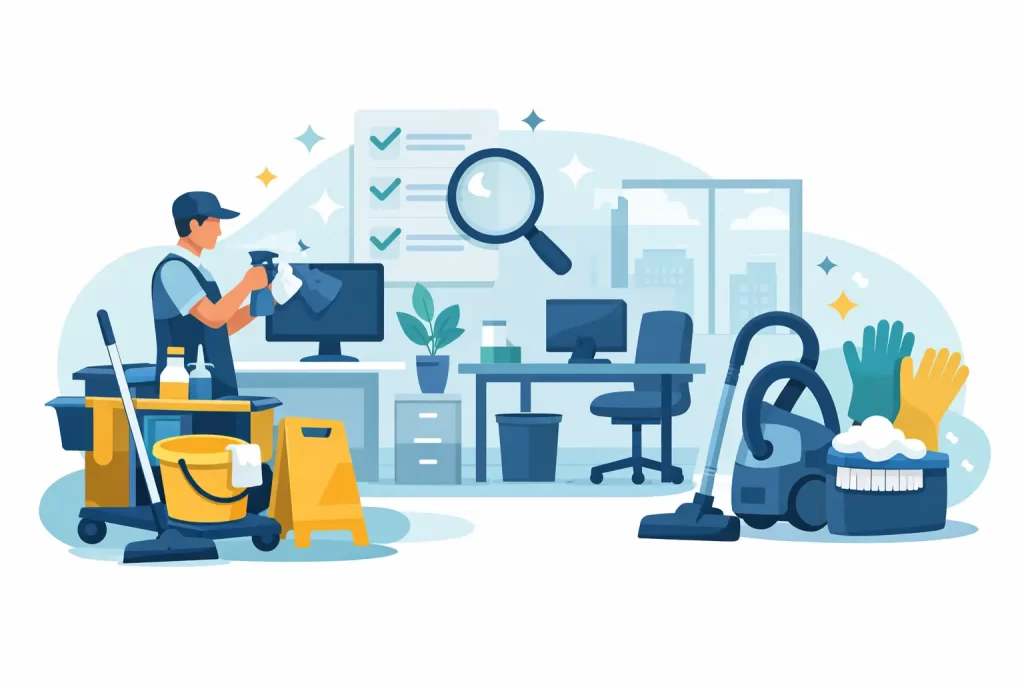
A clean office is not just about empty trash cans and vacuum lines in the carpet. It affects how employees feel at work, how visitors view your business, and how well your space supports daily operations. If you are asking, what does office cleaning include, the short answer is routine care for the areas people see, touch, and use every day – with the scope tailored to your building, schedule, and needs.
For most offices, professional cleaning covers work areas, restrooms, break rooms, floors, waste removal, and high-touch surfaces. The right plan goes beyond a quick visual cleanup. It helps create a healthier, more organized, and more professional environment for your team and your customers.
What Does Office Cleaning Include in a Standard Service?
Standard office cleaning is designed to keep the workplace presentable between deeper cleanings. It usually focuses on the areas that collect the most dust, fingerprints, spills, and daily traffic.
Workstations, Desks, and Common Areas
Professional cleaners typically dust accessible surfaces, including desks, tables, shelves, reception counters, window ledges, and office furniture. They may wipe down exterior surfaces of phones, monitors, keyboards, and desk accessories when these items are cleared and approved for cleaning.
Common areas receive special attention because they shape a visitor’s first impression. Reception desks, waiting-room tables, conference rooms, door glass, and shared seating are cleaned to remove dust, smudges, and everyday buildup. Cleaners generally do not move confidential paperwork, personal belongings, or expensive electronics unless that work has been specifically arranged.
Restroom Cleaning and Sanitizing
Restrooms are one of the most important parts of any office cleaning plan. A properly cleaned restroom should look clean, smell fresh, and be stocked for the next workday.
Service commonly includes cleaning and disinfecting toilets, urinals, sinks, faucets, counters, mirrors, stall doors, and touch points such as flush handles and door handles. Floors are swept and mopped, trash is removed, and supplies such as hand soap, paper towels, and toilet tissue can be replenished when provided by the client or included in the agreement.
The difference between cleaning and disinfecting matters here. Cleaning removes visible dirt and residue. Disinfecting uses appropriate products and contact times to reduce germs on hard, nonporous surfaces. Both steps are necessary in heavily used restrooms.
Break Rooms and Kitchen Areas
Coffee stations, microwaves, sinks, tables, and refrigerator exteriors can quickly make an office feel neglected. Standard break-room cleaning often includes wiping counters, cleaning sinks and faucets, wiping appliance exteriors, removing trash, and sweeping and mopping floors.
Interior refrigerator cleaning, oven cleaning, and removal of old food are not always part of routine service. Those tasks can be included, but they should be discussed ahead of time. Clear expectations prevent frustration and make sure the cleaning crew has the time and supplies needed to do the job properly.
Floors, Carpets, and Entryways
Floors take the most wear in an office, especially around entrances, hallways, break rooms, and copier areas. Routine service generally includes vacuuming carpets, sweeping hard floors, and damp mopping hard-surface flooring.
Spot cleaning may address minor spills or marks when possible. However, deep carpet extraction, hard-floor stripping and waxing, grout cleaning, and heavy stain removal are usually separate services. A weekly cleaning schedule may be enough for a low-traffic professional office, while busy retail-adjacent offices or medical-style settings may need more frequent floor care.
Trash and Recycling Removal
Emptying waste baskets and replacing liners is a basic but essential part of office cleaning. Crews usually collect trash from offices, common areas, break rooms, and restrooms, then place it in the building’s designated disposal area.
Recycling can also be included when containers are clearly marked and your building has a defined recycling process. Hazardous materials, sharps, chemicals, and unusually heavy waste require separate handling and should never be placed in regular office trash without prior approval.
High-Touch Surface Cleaning for a Healthier Office
Door handles, elevator buttons, light switches, shared printers, conference tables, faucet handles, and refrigerator handles are touched throughout the day. These surfaces deserve regular attention, particularly during cold and flu season or when several people share the same workspace.
A reliable office cleaning team will use appropriate products for the surface and follow product directions for disinfecting. More product is not always better. The goal is effective cleaning without damaging finishes, leaving residue, or using harsh chemicals where they are not needed.
High-touch cleaning can be included in a standard recurring plan, but frequency should match your office activity. A small office with a few employees has different needs than a busy customer-facing business with employees, deliveries, and visitors coming through all day.
Services Often Added to an Office Cleaning Plan
Some jobs require more than standard recurring cleaning. Add-on services are useful for seasonal resets, move-ins, special events, or spaces that have fallen behind on maintenance.
Common add-ons include:
- Interior window and glass cleaning
- Deep carpet cleaning and spot treatment
- Detailed cleaning of baseboards, vents, and blinds
- Upholstery or fabric chair cleaning
- Interior refrigerator and cabinet cleaning
- Post-construction or move-in cleaning
These services are usually priced separately because they require extra labor, equipment, and time. Asking for them upfront is the best way to receive an accurate estimate and avoid treating a deep-cleaning project like a basic maintenance visit.
What Office Cleaning Usually Does Not Include
Every cleaning agreement has boundaries. Knowing them makes it easier to choose the right service and protect your workplace.
Routine office cleaning does not normally include organizing files, handling money, moving heavy furniture, cleaning inside personal drawers, repairing fixtures, or managing biohazard waste. Exterior window washing, high dusting above standard reach, pest removal, and major spill remediation may also require specialized providers or separate scheduling.
That does not mean these needs cannot be addressed. It simply means they should be identified during the estimate process. A professional cleaning company should explain what is included, what requires an add-on, and how often each task will be completed.
How Often Should an Office Be Cleaned?
Cleaning frequency depends on foot traffic, office size, restroom use, flooring, business hours, and the type of work performed. A small office with limited visitors may do well with weekly service. A larger office or customer-facing location may benefit from cleaning two to five times per week.
Restrooms, trash removal, entryways, and break rooms usually need the most frequent care. Conference rooms, private offices, and detailed dusting may be scheduled less often if they are not used daily. The best plan is not always the most frequent one. It is the plan that keeps your workplace consistently clean without paying for services you do not need.
Questions to Ask Before Hiring an Office Cleaner
Before choosing a provider, ask for a clear task list and cleaning schedule. You should know which areas will be cleaned during every visit, which tasks rotate, who supplies products, and how quality concerns are handled.
It is also smart to ask whether the company is licensed, insured, and bonded. Your cleaning team works in your business after hours or around employees and equipment, so reliability and accountability matter. Professionally trained staff, consistent communication, and clear access procedures help protect your property and keep service running smoothly.
JPR Cleaning works with New Jersey businesses that want dependable office and retail cleaning built around their actual needs. Whether you need recurring service or a one-time detailed cleanup, a clear estimate makes it easier to plan with confidence.
A well-maintained office tells employees and visitors that the details matter. Start with the spaces people use most, set a schedule that fits your traffic, and choose a cleaning partner you can trust to deliver consistent care.