
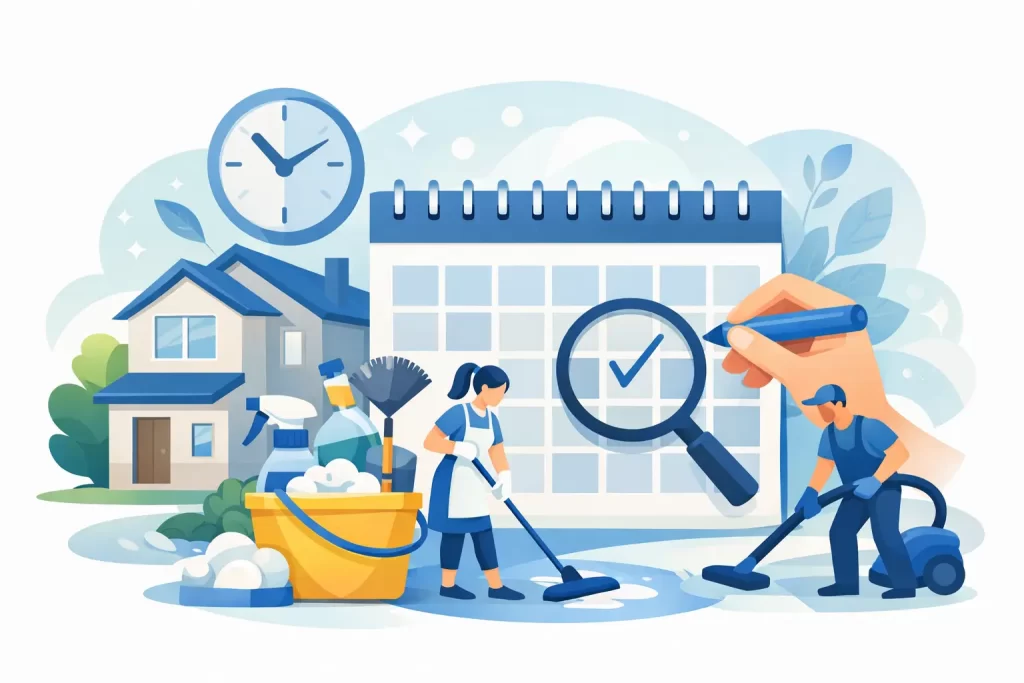
A home can look fine on Saturday and feel completely off by Wednesday. That is usually the moment people start asking how often schedule house cleaning without overpaying or falling behind. The right answer depends less on square footage alone and more on how your home is actually used day to day.
Some households need weekly service to stay comfortable and sanitary. Others do well with biweekly visits and a simple touch-up routine in between. If you wait too long between cleanings, dust builds up, bathrooms get harder to sanitize, floors take more wear, and the job becomes bigger and more expensive each time.
How often should you schedule house cleaning?
For most homes, biweekly cleaning is the sweet spot. It keeps kitchens, bathrooms, floors, and dust under control without letting mess and buildup get too far ahead. That schedule works especially well for working adults, couples, and families who keep up with basic daily tasks but do not want to spend free time deep cleaning.
Weekly cleaning makes sense when your home gets heavy use. If you have kids, pets, frequent guests, allergies, or a busy work schedule, dirt and clutter usually return faster than you expect. Weekly service helps maintain a consistently clean, healthy, and presentable space instead of constantly trying to reset it.
Monthly cleaning can work for smaller households, lighter-use homes, or people who are naturally tidy and stay on top of dishes, laundry, counters, and quick bathroom wipe-downs. The trade-off is that monthly visits often feel more like catch-up cleaning than maintenance. It can still be worthwhile, but it requires more effort from you between appointments.
For some homes, a one-time deep cleaning is the right starting point before moving into a recurring schedule. That is often the best choice when a house has gone a while without professional service, after renovation work, before hosting, or after a move.
What affects how often to schedule house cleaning?
The biggest factor is traffic. A two-bedroom apartment with one occupant will not collect dirt the same way a busy family home does. More people usually means more bathroom use, more crumbs, more fingerprints, and more floor care.
Pets change the schedule fast. Dog hair, cat litter, muddy paw prints, nose marks on glass, and dander can push a home from biweekly to weekly service. Even well-groomed pets create more cleaning needs, especially on floors and upholstered surfaces.
Children also raise the cleaning load. Toys and clutter are part of it, but the bigger issue is constant surface contact. Sticky hands on cabinets, spills around dining areas, tracked-in dirt, and heavier bathroom use all add up.
Your work routine matters too. If you work from home, your kitchen, bathroom, and living areas are in use all day instead of just mornings and evenings. That usually means faster buildup and a stronger need for recurring service.
Then there is personal preference. Some people are comfortable with a lived-in look for longer stretches. Others want the home to feel guest-ready most of the time. Neither approach is wrong. The best schedule is the one that protects your time and keeps your space at the level of cleanliness you actually want.
A practical cleaning schedule by household type
A single professional in a smaller apartment often does well with cleaning every two to four weeks. If the space is organized and lightly used, monthly service may be enough. If work hours are long and home chores keep getting pushed off, biweekly is usually a better fit.
A couple without children often lands in the biweekly range. The home stays under control, but bathrooms, floors, and dusting still benefit from regular professional attention. If one or both people work from home, weekly or biweekly service becomes more realistic.
Families with children usually benefit from weekly house cleaning, especially if both adults have full schedules. The main advantage is consistency. Instead of letting dirt and mess build into a bigger weekend project, the home stays manageable and healthier throughout the month.
Homes with pets often need weekly service as well, even if the household is small. Hair and dander can settle quickly, and floors need more regular care. If allergies are part of the picture, longer gaps between cleanings can make the home less comfortable.
Larger homes are another case where frequency matters. Even if some rooms are rarely used, more square footage generally means more surfaces to maintain and more areas where dust can collect. A larger home on a monthly schedule may still feel neglected between visits unless daily upkeep is strong.
When weekly cleaning is worth it
Weekly service is not just for luxury households. It is often the most practical option when cleanliness affects comfort, health, and peace of mind every single day.
If your bathrooms never seem to stay clean, your kitchen is in constant rotation, or your floors look dirty again a day after vacuuming, that is a sign the home is being used at a level that supports weekly visits. The same goes for homes where hosting is frequent or where business and personal life overlap, such as home offices with client traffic.
Weekly cleaning also reduces wear on surfaces. Soap scum, grease, dust, and grime are easier to remove when they are handled regularly. That helps preserve tile, fixtures, flooring, and other finishes over time.
When biweekly cleaning is the better balance
Biweekly cleaning is the most common schedule for a reason. It gives you reliable upkeep without the cost of weekly service, and it prevents the home from slipping too far between appointments.
This is often the best fit for households that can manage light daily maintenance but do not want to spend hours scrubbing bathrooms, mopping floors, or dusting baseboards. It is also a good middle ground for customers who want professional results on a recurring basis while keeping the budget predictable.
If you are unsure where to start, biweekly service is usually the safest choice. After a month or two, it becomes clear whether the home is staying comfortable or whether it would benefit from more frequent visits.
Signs you are waiting too long between cleanings
If every cleaning feels like a reset instead of routine maintenance, your schedule is probably too spread out. The same is true if dust is visible before the next appointment, bathrooms are hard to bring back, or you find yourself doing a lot of catch-up work before cleaners arrive.
Another sign is stress. If the condition of the home keeps sitting in the back of your mind, the current routine is not really saving you time. A better schedule should reduce mental load, not add to it.
There is also the issue of hygiene. Kitchens and bathrooms are easier to keep sanitary when cleaned on a predictable cycle. Longer gaps allow buildup that is not just unpleasant to look at, but harder to remove well.
How to choose the right starting point
If your home has not had professional cleaning in a while, start with a deep cleaning. That gives the space a proper baseline. After that, move into weekly, biweekly, or monthly recurring service based on how fast your home returns to its usual level of mess.
If your biggest concern is budget, do not assume the least frequent option is always the best value. When cleanings are too far apart, each visit tends to involve more labor and more buildup. A steady recurring schedule often delivers better overall results and a more comfortable home.
For homeowners and renters alike, the best plan is the one you can stick with. Consistency matters more than good intentions. A dependable schedule keeps your home cleaner, healthier, and easier to enjoy without the cycle of falling behind and starting over.
At JPR Cleaning, we see this every day. The right frequency is not about selling the most visits. It is about matching service to the way you live so your home stays clean, presentable, and easier to manage.
If you are still deciding how often to schedule house cleaning, start by looking at your last two weeks, not your ideal routine. How often were the bathrooms used, how fast did floors get dirty, and how much time did you really have to keep up? That answer is usually more honest, and more useful, than any one-size-fits-all rule.