
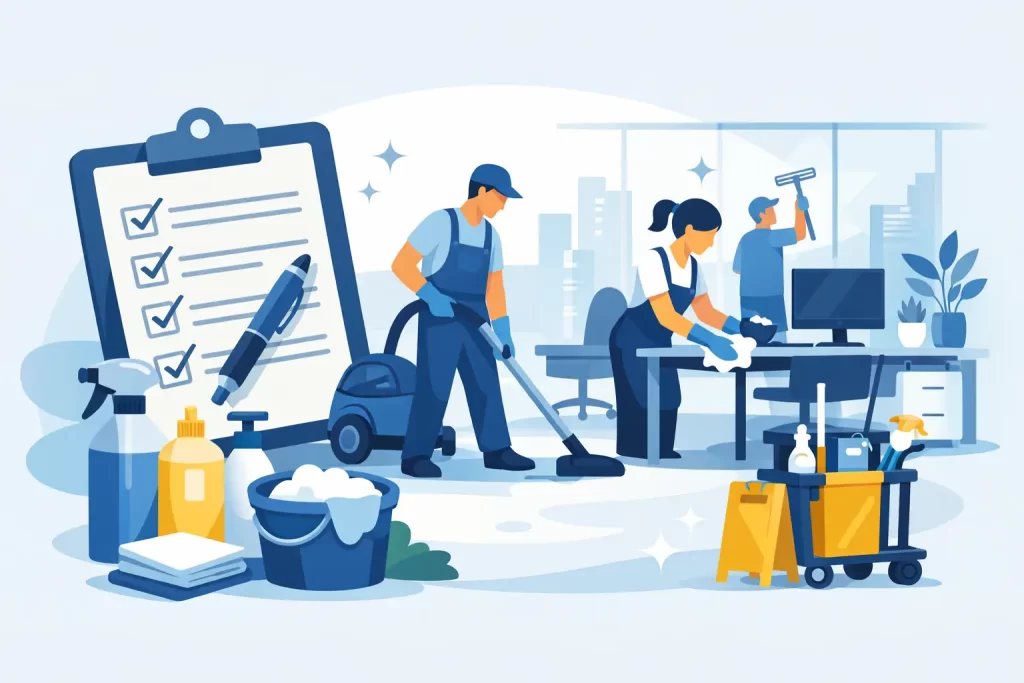
A business can look clean at a glance and still miss the details employees and customers notice first: fingerprints on entry doors, a restroom without supplies, dust on reception counters, or trash left overnight. A clear business cleaning service checklist turns vague expectations into consistent results. It also gives business owners, office managers, and retail operators a practical way to compare cleaning providers and confirm the work is being done properly.
The right checklist should reflect how your facility operates. A busy medical-adjacent office, a retail shop with daily foot traffic, and a small professional office will not need the same schedule or level of sanitation. What they do need is a reliable plan that protects presentation, health, and the people who use the space.
Start With Your Facility’s Daily Needs
Before assigning tasks, identify the areas that receive the most traffic and attention. Entryways, restrooms, break rooms, shared desks, customer-facing counters, and floors usually need the most frequent care. A cleaning plan should prioritize these spaces rather than treating every square foot the same.
Daily service is often the right choice for businesses with steady customer traffic, larger teams, food areas, or multiple restrooms. Smaller offices may only need cleaning two or three times a week, with touch-up service as needed. The best schedule depends on occupancy, operating hours, industry requirements, and how quickly your facility gets dirty.
Your daily checklist should cover the basics that keep the workplace ready for business:
- Empty trash and replace liners throughout offices, work areas, break rooms, and restrooms.
- Clean and disinfect restroom fixtures, sinks, counters, mirrors, handles, and high-touch surfaces.
- Restock toilet paper, hand soap, paper towels, and other agreed-upon restroom supplies.
- Wipe down reception desks, service counters, tables, door handles, light switches, and shared equipment.
- Clean break room counters, sinks, tables, appliance exteriors, and food preparation surfaces.
- Vacuum carpeted areas and sweep or mop hard floors where needed.
- Remove visible smudges from glass entry doors, partitions, and customer-facing windows.
A dependable cleaning team should not need to be reminded of these core items every visit. Still, documenting them protects everyone. It gives your staff a clear standard and gives the cleaning provider a defined scope of work.
Business Cleaning Service Checklist for Weekly Work
Weekly tasks focus on the buildup that daily cleaning may not fully address. These services help your workplace stay fresh and professional over time, not just clean enough for the next morning.
Carpeted areas should receive thorough vacuuming, including edges and corners where dust collects. Hard floors may need deeper mopping or machine cleaning depending on the material and the amount of foot traffic. In retail spaces, floors near entrances, fitting rooms, and checkout counters often need extra attention.
Weekly service should also include dusting accessible surfaces such as window ledges, baseboards, shelves, chair legs, blinds, and furniture. Cleaning teams should wipe the outside of trash bins, sanitize phones and shared keyboards when requested, and remove fingerprints from glass and polished surfaces.
In the break room, weekly work may include cleaning inside the microwave, wiping refrigerator exteriors, addressing spills around vending or coffee stations, and removing old food from shared areas if your company policy allows it. Clarify this point in advance. Some businesses want cleaners to remove expired items, while others prefer staff to handle personal food and belongings.
Plan Deep Cleaning Before Problems Show Up
A professional appearance is easier to maintain when deeper cleaning is scheduled before dirt becomes obvious. Monthly or quarterly tasks are especially valuable in offices and stores that welcome clients, customers, vendors, and job candidates.
Deep-cleaning needs vary, but common items include detailed baseboard cleaning, high dusting, interior glass cleaning, vent dusting, spot treatment for carpets, upholstery cleaning, and floor polishing or stripping. Restrooms may need grout attention, scale removal, and a deeper treatment of partitions and fixtures.
Do not assume all deep-cleaning services are included in a standard recurring quote. Many providers treat them as separate services because they require more time, equipment, or specialty products. That is not a red flag, provided the scope and pricing are clear upfront. Ask what is included in your recurring service and what should be scheduled separately.
Seasonal needs matter too. New Jersey businesses often see more salt, water, mud, and debris near entrances during winter. Extra mat cleaning, floor care, and entryway service can prevent slips while protecting flooring from premature wear.
Define High-Touch and Health-Conscious Cleaning
Cleaning and disinfecting are related, but they are not identical. Cleaning removes dirt and debris. Disinfecting uses the appropriate product and contact time to reduce germs on hard, nonporous surfaces. Your checklist should identify the high-touch points that deserve regular attention, especially in shared workspaces.
These typically include door handles, elevator buttons, light switches, faucets, toilet flush handles, cabinet pulls, break room appliances, shared phones, conference tables, and reception counters. A well-trained cleaning team knows that simply spraying a product and wiping it away immediately may not meet the product’s required contact time.
It is also smart to discuss product preferences. Some businesses want fragrance-free products because of employee sensitivities. Others need special consideration around food service, childcare, healthcare-adjacent environments, or customer-facing merchandise. A professional provider should be able to explain what products are used and adjust the plan when a reasonable alternative is needed.
Set Clear Responsibilities for Supplies and Access
Many cleaning problems are really communication problems. Before service begins, decide who provides consumable items such as paper towels, toilet paper, hand soap, trash liners, and cleaning products. Some cleaning companies supply everything; others can restock supplies that the client purchases. Either approach can work, but it should be stated clearly.
Access is another essential detail. Explain how cleaners enter the building, where they park, which areas are off-limits, and what to do if an alarm is armed. If cleaning happens after hours, provide an emergency contact who can answer questions without delay.
For offices with confidential records, customer information, medication, cash drawers, or valuable equipment, establish boundaries from the start. Cleaners should know which desks can be wiped, which papers should not be moved, and whether locked offices require service. Trust matters in every workplace, which is why licensed, insured, and bonded service providers offer added peace of mind.
Look for Accountability, Not Just a Low Price
A low quote may look appealing until missed visits, inconsistent staffing, or poor communication begin disrupting your business. Price matters, but it should be weighed against reliability, training, insurance coverage, and quality control.
Ask how the provider handles call-outs, service concerns, and changes to your schedule. Find out whether the cleaning crew is trained for commercial work and whether the company performs inspections or follow-ups. You should also confirm that the provider carries appropriate insurance and can give you a written scope of service.
A good commercial cleaning partner listens to what matters in your facility. For one business, spotless customer restrooms may be the highest priority. For another, it may be keeping conference rooms ready for early meetings or preventing dust buildup around inventory. The service should fit the operation, not force the operation to fit a generic cleaning package.
Review the Checklist Regularly
Your cleaning needs can change quickly. A growing team, a new office layout, seasonal weather, extended hours, or increased customer traffic may require adjustments. Review your business cleaning service checklist after the first month of service, then periodically throughout the year.
Walk the facility at the same time you expect it to look its best, such as before opening or after the cleaning crew finishes. Check entryways, restrooms, break rooms, floors, and customer-facing areas. If something is missed repeatedly, address it early and update the scope rather than letting frustration build.
For New Jersey businesses that want dependable commercial cleaning without the guesswork, JPR Cleaning can help create a service plan around your workplace, schedule, and standards. A clear checklist is not paperwork for its own sake. It is the practical foundation for a cleaner space, healthier routines, and a workplace people feel good walking into every day.