A restroom can shape a customer’s opinion of your business in less than a minute. Odor, empty soap dispensers, wet floors, and stained fixtures signal neglect, even when the rest of the facility looks well managed. Strong commercial restroom cleaning standards give your team a repeatable way to protect health, maintain a professional appearance, and avoid those costly first impressions.
For offices, stores, medical waiting areas, and other customer-facing spaces, the goal is not simply to make the room look clean. The goal is to keep it sanitary, stocked, safe, and ready for the next person all day long.
What Commercial Restroom Cleaning Standards Should Cover
There is no single cleaning checklist that fits every commercial restroom. A small office restroom used by a few employees needs a different schedule than a busy retail restroom with hundreds of daily visitors. Local health requirements, building rules, and the type of business also matter.
Still, dependable standards should address four areas: touchpoints, fixtures, floors, and supplies. Each area affects both sanitation and the customer experience.
High-touch points include door handles, stall locks, faucet handles, flush levers or buttons, soap dispensers, paper towel dispensers, hand dryers, and light switches. These surfaces should be cleaned and disinfected with products used according to label directions. Spraying a disinfectant and wiping it off immediately may not allow enough contact time to do its job.
Fixtures need more than a quick wipe. Toilets, urinals, sinks, counters, mirrors, and partitions should be cleaned with the right product for the surface and soil level. Mineral buildup, soap scum, and stains can make a restroom look poorly maintained even when it has been recently cleaned.
Floors deserve special attention because they collect moisture, paper debris, and contaminants. A clean floor should be free of visible dirt and safe to walk on. Wet-floor signs should be placed whenever mopping creates a slip risk, then removed promptly once the surface is dry.
Supplies are part of the standard, not an afterthought. Soap, toilet paper, paper towels, sanitary products where provided, and waste liners should be checked at every service. An empty dispenser tells visitors the restroom has not been monitored.
A Practical Daily Restroom Cleaning Routine
The best routine is based on traffic, not just the clock. A lightly used restroom may need a detailed clean once a day with periodic checks. A high-traffic retail, restaurant, or public facility may need service several times throughout the day.
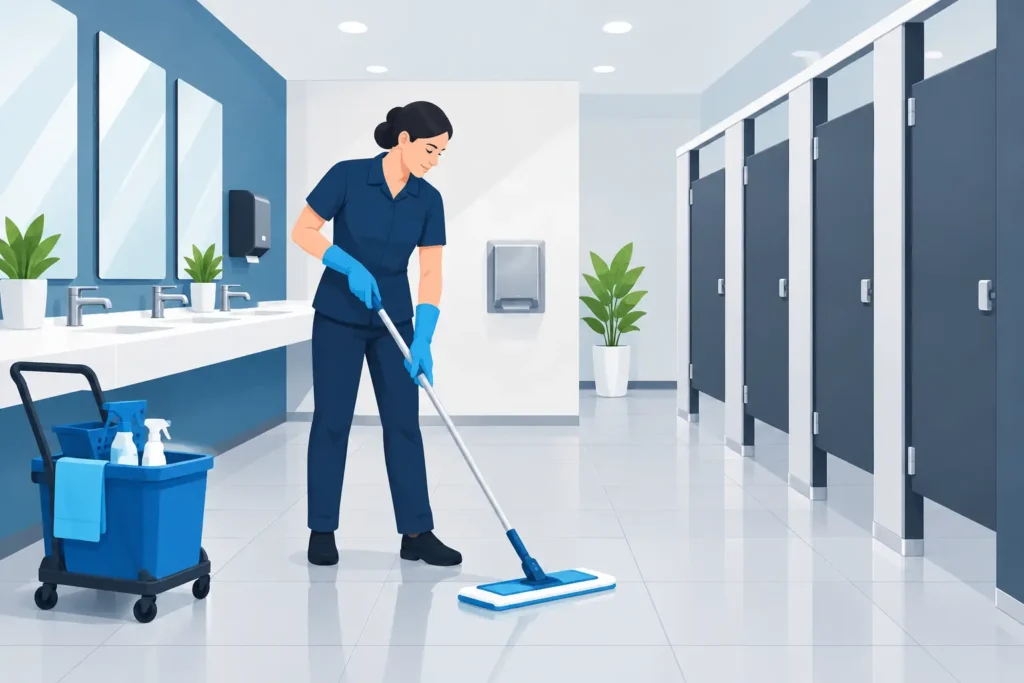
Before cleaning, staff should post caution signage, wear appropriate personal protective equipment, and bring separate tools for restroom use. Color-coded microfiber cloths and mops help prevent cross-contamination. A cloth used on a toilet should never be used on a sink, counter, or any surface outside the restroom.
Start by removing trash and replacing liners. Emptying waste first creates room to clean properly and prevents debris from being spread across freshly serviced surfaces. Next, restock consumables so the restroom remains functional after the cleaning is complete.
Apply cleaner or disinfectant to toilets, urinals, sinks, and other fixtures, allowing the required dwell time. While the product works, clean mirrors, partitions, dispensers, door handles, and other high-touch surfaces. Work from cleaner areas toward dirtier areas, and from higher surfaces to lower ones.
Finish with the floor. Sweep or collect dry debris before mopping, then clean the floor with a restroom-appropriate product. Pay close attention to corners, around toilet bases, beneath sinks, and along walls, where buildup can create odors and make a facility look neglected.
A final walkthrough matters. Check that toilets flush, faucets run, dispensers work, floors are drying safely, and the room smells neutral and fresh. Heavy fragrance is not a substitute for cleaning. In some workplaces, strong scents can also bother employees or customers with sensitivities.
Cleaning and Disinfecting Are Not the Same Task
One of the most common gaps in commercial restroom care is treating cleaning and disinfecting as interchangeable. They serve different purposes.
Cleaning removes visible soil, residue, and debris. Disinfecting uses an approved product to reduce germs on a surface when it is applied correctly. Dirty surfaces can limit a disinfectant’s effectiveness, which is why cleaning often needs to happen first.
The right method depends on the surface and the product. Follow the manufacturer’s instructions for dilution, ventilation, protective equipment, and contact time. Never mix cleaning chemicals. Combining products can create harmful fumes and damage surfaces.
For facilities that serve the public, this detail matters. A restroom that looks polished but has poorly maintained touchpoints can still create health concerns. On the other hand, harsh products used too frequently on the wrong materials may dull fixtures, damage grout, or leave irritating odors. Good standards balance sanitation with material care.
How Often Should a Commercial Restroom Be Cleaned?
Frequency depends on restroom traffic, business type, operating hours, and the expectations of your customers and employees. A professional office with a small staff may do well with daily detailed cleaning and a midday supply check. A retail store, fitness center, clinic, or high-volume office may require multiple inspections and cleanings each day.
Rather than relying only on a fixed schedule, watch for real signals: overflowing trash, low supplies, water around sinks or toilets, odors, visible debris, and complaints. These signs call for immediate attention, even if the next scheduled service is only an hour away.
For high-use facilities, a simple restroom log can help. Staff can record the time of each inspection, note what was cleaned or restocked, and report maintenance issues such as leaks, broken dispensers, loose fixtures, or slow drains. The log creates accountability and makes recurring problems easier to spot.
The Details Customers Notice First
Customers may not inspect every surface, but they notice certain details immediately. Streaked mirrors, grime around faucet bases, overflowing bins, empty soap dispensers, and unpleasant odors stand out fast. So do damaged fixtures and wet floors.
These issues are not always caused by poor cleaning. Sometimes they point to maintenance needs, inadequate supply levels, or a cleaning schedule that no longer matches restroom traffic. That is why restroom standards should include reporting procedures, not just cleaning tasks.
A reliable cleaning team should know when to alert a manager about a leak, clogged toilet, nonworking hand dryer, cracked tile, or persistent odor. Cleaning can improve presentation, but it cannot solve a plumbing or ventilation problem on its own.
Building a Standard Your Team Can Maintain
The strongest standards are clear enough to follow during a busy shift. They define what “clean” looks like, which products and tools belong in the restroom, how often service is required, and who is responsible for documenting issues.
Training is equally important. Staff should understand proper product use, safe chemical storage, hand hygiene, cross-contamination prevention, and the difference between routine cleaning and a situation that requires extra attention. Blood or other bodily fluid incidents, for example, require a different response and appropriate protective procedures.
For many businesses, outsourcing restroom care provides a more consistent result. Professionally trained cleaners bring established methods, dedicated equipment, and the discipline to complete the details that are easy to miss when employees are focused on customers and daily operations. JPR Cleaning helps New Jersey businesses maintain clean, healthy, and professional spaces with dependable commercial cleaning service.
A Restroom Standard Is a Business Standard
Your restroom is a small space with a large effect on trust. When it is clean, stocked, dry, and odor-free, customers can focus on your products or services instead of questioning how your business is managed. Set a realistic schedule, inspect often, and treat every restroom visit as part of the experience you provide.