
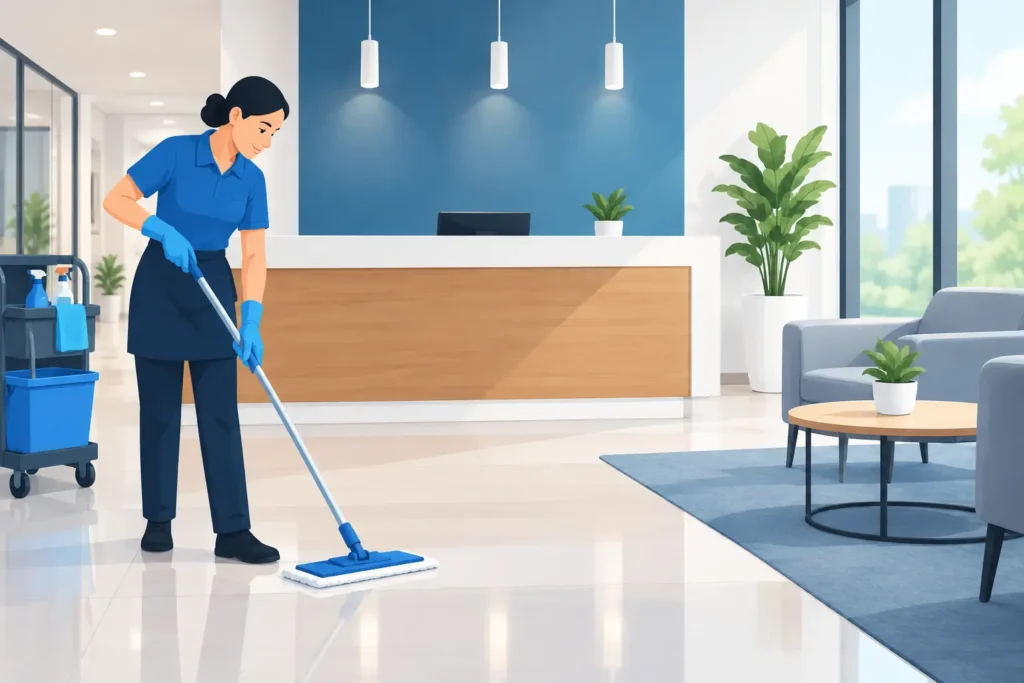
A reception area starts making an impression before anyone says hello. A smudged glass door, dusty check-in counter, overflowing trash can, or stained carpet can make an otherwise well-run business feel neglected. On the other hand, a clean, fresh, organized entrance tells clients, visitors, and employees that your business pays attention to details.
Knowing how to clean reception areas means looking beyond what is visibly dirty. This space has high-touch surfaces, constant foot traffic, and furniture that can collect dust, stains, and odors quickly. A dependable routine keeps the area presentable throughout the day while supporting a healthier workplace.
Start With a Reception Area Cleaning Plan
Reception areas vary by business. A medical office may need more frequent disinfection of counters and door handles. A retail location may need extra attention on floors, display surfaces, and entry glass. A corporate office may have upholstered seating, decorative fixtures, and visitor check-in equipment that require careful cleaning.
The right schedule depends on traffic. A quiet professional office may only need a detailed cleaning after hours and light touch-ups during the day. A busy lobby with clients coming and going all day should be checked several times for fingerprints, trash, tracked-in debris, and restroom-related odors near the entrance.
Before cleaning, remove obvious clutter. Collect abandoned papers, cups, packaging, and other items that do not belong in the space. Straighten chairs, magazines, brochures, and decorative items. Organization is not a substitute for cleaning, but a neat layout makes the entire area look more cared for.
Clean From High Surfaces to the Floor
Working from top to bottom prevents dust and debris from falling onto areas you have already cleaned. Begin with light fixtures, vents, ledges, wall art, and high shelves. Use a microfiber cloth or duster that captures dust instead of spreading it into the air.
Next, clean the reception desk and surrounding furniture. The desk is often the most visible surface in the room, so it should be free of dust, smears, crumbs, and clutter. Wipe counters with the correct cleaner for the material. Wood, stone, laminate, glass, and metal can all react differently to harsh chemicals, so using one product on every surface may cause damage over time.
Pay attention to areas guests notice up close. These include the sign-in station, pens, payment terminals, brochure holders, telephone, computer accessories, and package drop-off areas. Clean personal work items with care and avoid spraying liquids directly onto electronics. Apply cleaner to a cloth first, then wipe the surface gently.
Glass doors, windows, partitions, and mirrors should be cleaned frequently. Fingerprints and streaks are especially noticeable in natural light. Use a clean microfiber cloth and glass cleaner, changing cloths when they become damp or dirty. A streak-free entry door immediately improves the appearance of the whole reception area.
Disinfect High-Touch Points Without Missing the Details
Cleaning removes dirt and visible residue. Disinfecting reduces germs on surfaces people touch often. Both are necessary in a professional reception area, particularly during cold and flu season or when your business welcomes a large number of guests.
Focus on door handles, push plates, elevator buttons, check-in screens, chair arms, light switches, railings, shared pens, phones, and payment terminals. First remove visible soil, then use an EPA-registered disinfectant according to the product directions. The disinfectant needs to remain wet for the stated contact time to work properly. Wiping it away immediately may reduce its effectiveness.
Do not overlook seating. Vinyl, leather, and hard-surface chairs can usually be wiped and disinfected with a product approved for that material. Fabric seating needs a different approach. Vacuum upholstered chairs regularly, address stains promptly, and schedule periodic deep cleaning to remove embedded soil and odors. Using the wrong chemical can discolor fabric or leave behind a sticky residue that attracts more dirt.
Hand sanitizer stations should also be checked and refilled. A clean dispenser that is easy to reach sends a practical message that you care about visitor comfort and workplace health.
Keep Floors Safe, Clean, and Presentable
Floors take the hardest use in any reception area. Rain, salt, mud, leaves, and street debris can be carried in within minutes, especially during New Jersey’s wet winters and changing seasons. A dirty entry floor affects appearance, but it can also become a slip hazard.
Place quality walk-off mats at entrances and clean them regularly. Mats trap dirt before it spreads across carpet, tile, or hardwood, but they stop working when they are saturated with debris. Vacuum, shake out, or professionally clean mats based on foot traffic and weather conditions.
Vacuum carpets thoroughly, including edges, corners, beneath seating, and around the reception desk. Spot-clean spills right away rather than waiting for the next scheduled service. Old stains are harder to remove and can create lasting odors. For busy offices, periodic carpet extraction helps restore the appearance of high-traffic paths that routine vacuuming cannot fully refresh.
Hard floors should be swept or dust mopped before mopping. Use the right floor cleaner and avoid leaving excess water behind. Overwet floors can be dangerous and may damage certain materials. Place wet-floor signs whenever the floor is being mopped, and allow adequate drying time before reopening the area to visitors.
Manage Trash, Odors, and Restroom Spillover
Trash is one of the quickest ways for a reception space to look unprofessional. Empty waste bins before they overflow, replace liners, and wipe the exterior of the container when needed. This is especially important for bins near coffee stations, entry doors, and waiting areas.
A pleasant-smelling reception area should smell clean, not heavily fragranced. Strong air fresheners can bother clients with allergies, asthma, or scent sensitivities. The better approach is to identify the source of the odor. Damp mats, full trash cans, stained upholstery, dirty HVAC vents, and nearby restrooms are common causes.
If the reception area is close to a restroom, inspect the route between the two spaces. Door handles, baseboards, floors, and walls near the restroom entrance often need more frequent attention. Regular cleaning helps prevent odors and grime from affecting the front of your business.
Create a Daily and Weekly Routine
A consistent routine prevents small issues from becoming obvious problems. Daily work should focus on visible debris, high-touch disinfection, restroom-adjacent areas, trash removal, entry glass, and floors. Staff can handle quick touch-ups during business hours, while a trained cleaning team can complete the detailed work after closing.
Weekly cleaning should go further. Dust vents and décor, wipe baseboards, clean chair legs, vacuum beneath furniture, spot-treat upholstery, sanitize less obvious touchpoints, and inspect walls for scuffs. Monthly or seasonal service may include carpet cleaning, floor care, interior window cleaning, and detailed cleaning of fixtures and hard-to-reach areas.
A simple inspection at the start of the day, midday, and before closing helps maintain standards. Look at the space from a visitor’s point of view. Is the entry glass clear? Are the chairs aligned? Is the counter clean? Are there crumbs, litter, or scuff marks on the floor? Small corrections made quickly can protect the overall impression.
When Professional Reception Cleaning Makes Sense
In-house teams can manage light daily maintenance, but professional service is often the better choice when staff are busy serving customers or managing office operations. Commercial cleaners bring trained staff, proper equipment, and a consistent process for cleaning different surfaces safely.
This matters most for high-traffic offices, retail locations, medical settings, apartment lobbies, and businesses that host clients regularly. It also helps when carpets are stained, floors need specialized care, or reception cleaning is being done inconsistently because no one owns the task.
JPR Cleaning provides dependable commercial cleaning for businesses that want their front entrance to reflect the quality of the work happening inside. A professionally maintained reception area supports a cleaner, healthier, and more welcoming environment without adding another task to your team’s day.
Your reception area does not need expensive décor to make guests feel confident in your business. It needs clean touchpoints, clear floors, fresh air, organized seating, and reliable attention every day.