
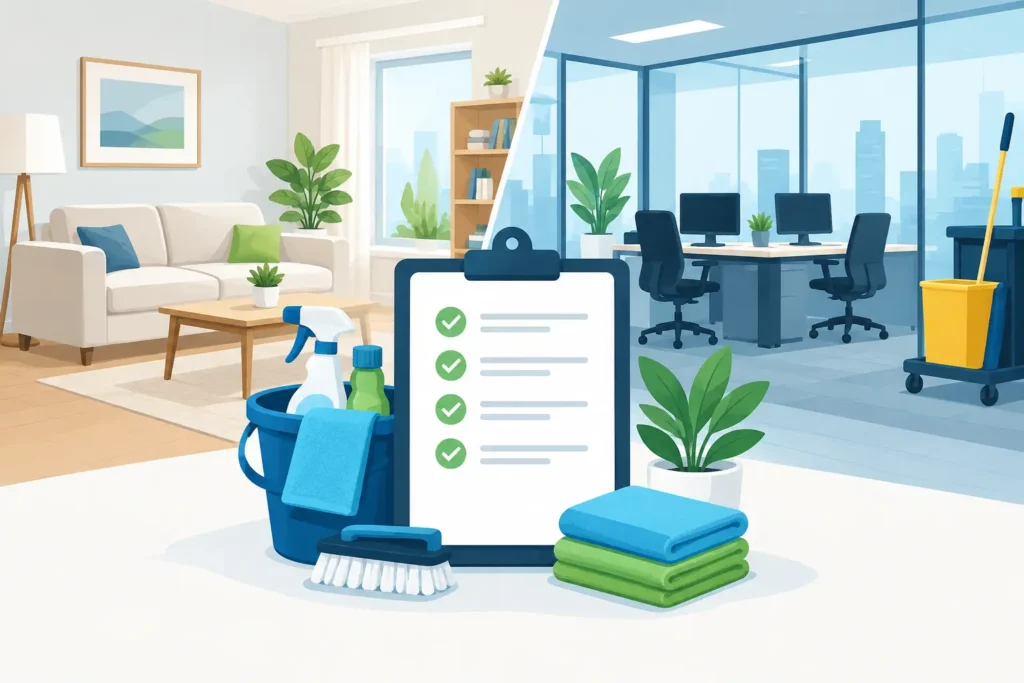
A missed task can turn a promising cleaning service into a frustrating experience. That is why a clear cleaning scope of work guide matters before anyone arrives at your home, apartment, office, or retail space. It puts the details in writing: what will be cleaned, how often service will happen, what requires extra attention, and what falls outside the agreed service.
For customers, a scope of work is peace of mind. For a professional cleaning team, it is the roadmap for delivering dependable results. When both sides understand the plan, there are fewer surprises, better accountability, and a cleaner, healthier space.
What Is a Cleaning Scope of Work?
A cleaning scope of work is a written description of the cleaning tasks included in a service agreement. It can be a simple checklist for a one-time apartment cleaning or a detailed plan for a multi-room office with different service needs throughout the week.
The best scopes do more than say “general cleaning.” That phrase means different things to different people. One customer may expect a quick dusting and vacuuming, while another expects baseboards, interior cabinets, and detailed appliance cleaning. A good scope replaces assumptions with clear expectations.
It should identify the property, the service areas, the cleaning frequency, the tasks included, and any special instructions. It should also explain how add-on services, access, supplies, and changes to the schedule will be handled.
Start With the Space and Its Purpose
Cleaning needs depend on how a space is used. A family home may need careful attention to kitchens, bathrooms, pet hair, and high-touch surfaces. An office may need daily trash removal, restroom sanitation, and clean common areas that make employees and visitors feel comfortable. A retail store may need spotless entry glass, fitting rooms, floors, and checkout areas before opening.
Begin by documenting the basic layout. Include the number of bedrooms, bathrooms, kitchens, offices, conference rooms, break rooms, restrooms, entrances, and other areas that need service. This gives the cleaning provider an accurate picture of the time, staff, and supplies required.
Then consider traffic. A rarely used guest room does not need the same attention as a busy kitchen. A quiet private office may be cleaned weekly, while a customer-facing lobby may require service several times a week. The right schedule is not about choosing the most service. It is about choosing the service level that keeps your space consistently clean without paying for work you do not need.
Define the Tasks Room by Room
The strongest cleaning scope of work guide breaks the work down by area. This makes it easy to confirm what the team will do and to spot items that may require separate pricing or a deeper cleaning.
Kitchens and Break Rooms
Standard kitchen or break room service often includes wiping exterior cabinet surfaces, cleaning countertops, sanitizing sinks, wiping tables, cleaning the microwave exterior and interior as agreed, removing trash, and mopping floors. Appliances deserve specific language. Cleaning the outside of a refrigerator is very different from removing food, cleaning shelves, and sanitizing the interior.
For homes, you may also want to state whether dishes will be washed, loaded into the dishwasher, or left untouched. For offices, clarify who is responsible for emptying personal mugs, food containers, and refrigerator contents before a scheduled deep clean.
Bathrooms and Restrooms
Bathrooms require clear sanitation standards. The scope should cover toilets, sinks, faucets, mirrors, counters, tubs, showers, floors, trash, and refilling supplies when those supplies are provided. In a commercial setting, include the expected frequency for restroom checks and whether paper towels, soap, toilet paper, and liners are part of the service.
If there is hard-water buildup, mildew, neglected grout, or other heavy buildup, it may need a first-time deep cleaning before routine maintenance can keep it under control. This is a common and reasonable distinction to make upfront.
Living Areas, Bedrooms, Offices, and Common Spaces
Routine tasks usually include dusting accessible surfaces, vacuuming carpets and rugs, mopping hard floors, emptying trash, wiping high-touch points, and straightening the space within reasonable limits. Detail matters here. Specify whether the team will dust blinds, clean ceiling fans, wipe doors, clean interior windows, or vacuum upholstered furniture.
For offices, identify the shared work areas versus individual desks. Many businesses prefer cleaners to avoid paperwork, computer equipment, and personal belongings unless clear instructions are provided. That protects confidential information and prevents accidental damage.
Separate Routine Cleaning From Deep Cleaning
Routine cleaning keeps an already maintained space in good condition. Deep cleaning addresses buildup and detail work that is not practical at every visit. Confusing the two is one of the fastest ways to create disappointment.
A recurring visit may cover visible surfaces, floors, bathrooms, kitchens, trash, and general dusting. A deep cleaning may add baseboards, interior window sills, doors and frames, detailed shower cleaning, cabinet fronts, behind or beneath accessible furniture, and more detailed appliance work.
Move-in, move-out, post-construction, and seasonal cleaning often require their own scope. These services can involve empty cabinets, interior appliances, construction dust, adhesive residue, or areas that have not been maintained for months. The condition of the space affects the time and effort required, so an estimate should reflect what the cleaning team will actually encounter.
Address Access, Safety, and Special Instructions
A scope of work should explain how cleaners will enter the property and who will be available if questions come up. For a residence, that may mean a key, lockbox, building access code, or someone meeting the team. For a commercial property, it may include alarm procedures, restricted rooms, elevator access, and a designated point of contact.
Special instructions should be practical and specific. Mention fragile items, rooms that are off-limits, pets, preferred products, allergies, and surfaces that need special care. Natural stone, hardwood floors, stainless steel, and specialty finishes may require different cleaning methods than standard surfaces.
Professional cleaners should also know about safety concerns before service begins. Report loose flooring, leaks, damaged outlets, unstable furniture, pest activity, or areas with biohazard concerns. Standard cleaning service is not the same as hazardous cleanup, mold remediation, or medical waste removal. Clear limits protect everyone involved.
Decide Who Provides Supplies and Equipment
Some customers prefer a cleaning company to bring supplies and equipment. Others want products used in their home or business to meet a particular preference. Either approach can work, but it should be stated clearly.
If the cleaning team provides supplies, the scope can identify whether standard products, green products, or fragrance-free options are available. If the customer provides products, make sure they are accessible and labeled. For commercial properties, clarify whether the provider supplies restroom consumables, trash liners, paper products, and hand soap or whether the business will keep those items stocked.
Equipment also deserves discussion. A professional team may bring vacuums, mops, and standard tools, but a large facility may need specialized floor equipment or site-specific tools. The details depend on the building and service plan.
Set Quality Standards and a Simple Communication Process
A checklist is useful, but quality is more than checking boxes. Your scope should state what a completed service should look like: floors free of visible debris, restrooms cleaned and sanitized, trash removed, high-touch surfaces wiped, and common areas presentable for the next day.
It also helps to agree on a simple process for feedback. If something was missed, customers should know who to contact and how quickly the issue will be addressed. If the property needs extra work before the next visit, the cleaning team should have a clear way to recommend it and provide approval before adding charges.
At JPR Cleaning, clear expectations are part of dependable service. A detailed walkthrough and honest conversation before work begins help ensure trained staff can care for your space the right way.
Review the Scope as Your Needs Change
A cleaning plan should not stay frozen if your household or business changes. A new pet, a growing family, a busier office, seasonal foot traffic, renovations, or a change in operating hours can all affect the right cleaning schedule.
Review the scope after the first few visits and then periodically. Ask whether any areas are being over-serviced, under-serviced, or overlooked. Small adjustments can make the service more efficient and keep the property looking its best.
Before you book, walk through the space with the same eye you would use before welcoming a guest or customer. The clearer you are about what clean means in your space, the easier it is for a professional team to deliver it consistently.