
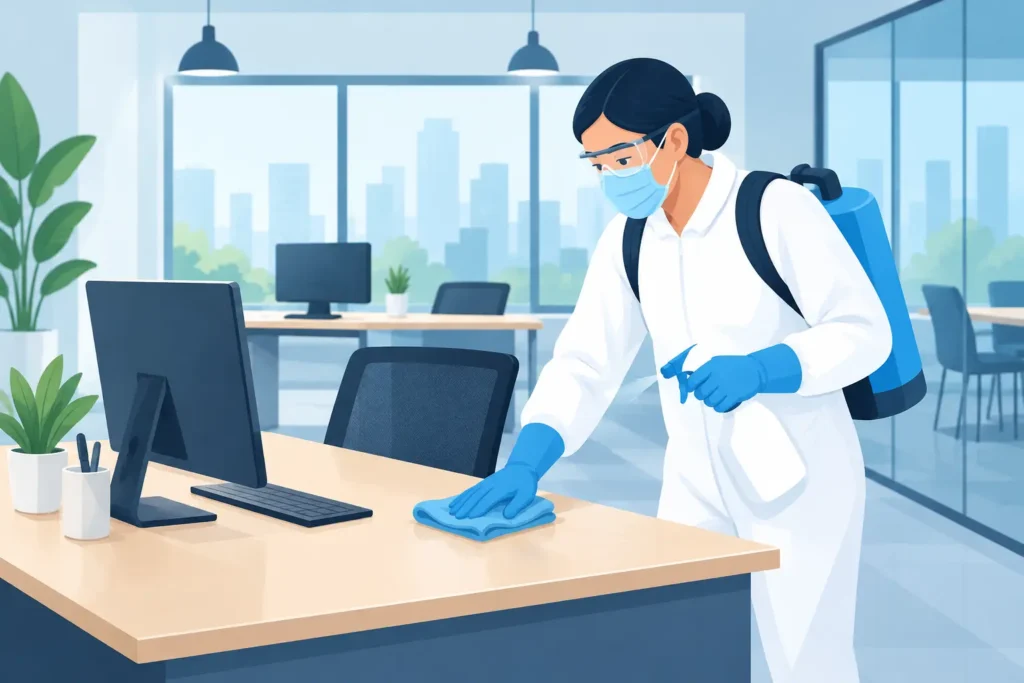
A clean-looking workplace is not always a disinfected one. Desks can be free of clutter, floors can shine, and restrooms can smell fresh while high-touch surfaces still need attention. The best ways to disinfect workplaces start with a practical routine that targets the places people touch most, uses products correctly, and fits the way your business actually operates.
For New Jersey offices, retail stores, clinics, and shared workspaces, the goal is not to spray every surface all day. It is to create a dependable process that supports employee confidence, customer comfort, and a professional business presentation.
Start With Cleaning, Then Disinfect
Cleaning and disinfecting are related, but they are not the same service. Cleaning removes visible dirt, crumbs, dust, and spills from a surface. Disinfecting uses an appropriate product to kill or inactivate many germs on that surface. If a counter or restroom fixture is visibly dirty, disinfectant may not work as intended until the surface has been cleaned first.
This matters most in break rooms, bathrooms, reception areas, and shared offices. A trained cleaner should remove soil with the proper cleaner, then apply a disinfectant according to the product label. Skipping that first step can leave behind residue and reduce the effectiveness of the disinfection process.
It also protects your surfaces. Strong products used too often or left on the wrong material can damage finishes, discolor upholstery, or leave glass streaky. The best process balances sanitation with proper surface care.
Focus on the Surfaces People Actually Touch
A workplace disinfection plan should follow traffic patterns, not just a checklist copied from another business. A quiet accounting office has different needs than a busy retail counter, a medical waiting room, or a warehouse break area.
The highest-priority surfaces are usually the ones touched by multiple people throughout the day. These include:
- Door handles, push plates, elevator buttons, and railings
- Reception counters, payment terminals, pens, clipboards, and shared tablets
- Light switches, copier buttons, shared keyboards, phones, and desk equipment
- Break room tables, refrigerator handles, microwave buttons, coffee stations, and sink fixtures
- Restroom stall latches, flush handles, faucets, soap dispensers, and paper towel dispensers
In a retail setting, pay special attention to fitting rooms, shopping baskets, carts, checkout counters, and customer seating. In an office, conference rooms deserve regular attention because several employees may use the same chairs, screens, remotes, and table surfaces in one day.
Not every surface needs the same frequency. A rarely used storage shelf does not need the attention of a front-door handle. Putting time where it has the most impact helps keep cleaning costs sensible while maintaining a healthier environment.
Use the Right Disinfectant the Right Way
The product matters, but the method matters just as much. Choose a disinfectant that is appropriate for commercial use and suitable for the specific surface being treated. Follow the manufacturer label for dilution, application, safety precautions, and contact time.
Contact time is one of the most overlooked parts of workplace disinfection. Many products need to remain visibly wet for a stated number of minutes before they are wiped away or allowed to air dry. A quick spray-and-wipe may make a surface look clean, but it may not provide the level of disinfection the product is designed to deliver.
Staff should also avoid mixing cleaning chemicals. Combining products can create harmful fumes or reduce effectiveness. Store supplies in labeled containers, keep them away from food areas, and make sure the people using them understand basic safety procedures, including glove use and ventilation requirements.
For electronics, use products approved for the device whenever possible. Excess liquid around keyboards, touchscreens, card readers, and phones can cause damage. A lightly moistened wipe is often safer than spraying directly onto equipment.
Build a Schedule That Matches Your Workplace
Consistency is what separates a dependable cleaning plan from occasional surface wiping. Daily disinfection is usually appropriate for high-touch common areas, restrooms, break rooms, reception spaces, and busy shared equipment. During a high-traffic period, some touchpoints may need a second or third service.
Lower-touch areas can be handled as part of a weekly or recurring cleaning program. For example, conference room chairs, cabinet pulls, interior doors, and workstation surfaces may be disinfected during scheduled service, while frequently touched items receive attention more often.
A simple schedule should account for three things: how many people use the space, how often customers enter, and whether the business has special sanitation needs. A small office with mostly assigned desks may need one approach. A retail location open seven days a week will likely need a more frequent rotation, especially around entrances and checkout areas.
It also helps to plan around business hours. Early morning, evening, or overnight cleaning allows professionals to complete detailed work without interrupting customers or employees. For many businesses, that is the difference between a cleaning routine that sounds good and one that is actually completed correctly.
Do Not Overlook Restrooms and Break Rooms
Restrooms and break rooms can shape how employees and visitors judge the entire workplace. A clean front lobby loses credibility quickly if the restroom is poorly maintained. These spaces also combine moisture, frequent contact, and shared fixtures, making regular cleaning and disinfection necessary.
In restrooms, the work should include toilets, urinals, sinks, faucets, dispensers, door hardware, stall locks, and floors around fixtures. Supplies should be checked at the same time. An empty soap dispenser or paper towel unit creates frustration and makes proper hand hygiene harder for everyone.
Break rooms need more than a quick wipe of the table. Pay attention to appliance handles, microwave controls, coffee makers, shared condiment stations, chairs, and sink areas. Food spills should be addressed promptly, both for cleanliness and to prevent odors or pests.
Support Disinfection With Better Daily Habits
Professional cleaning provides the foundation, but employees and managers also influence how clean a workplace stays between visits. Clear expectations can reduce avoidable messes and help keep shared areas presentable.
Encourage employees to clear food from desks, wipe up spills promptly, and return shared equipment in good condition. Keep hand soap, paper towels, and waste bins stocked. If your workplace has a designated person responsible for opening or closing checks, include a quick review of restrooms, break rooms, and reception touchpoints.
Avoid placing the entire burden on employees, though. Asking staff to disinfect every shared surface throughout the day can become inconsistent when they are focused on customers, deadlines, or operations. A professional cleaning team gives your business a reliable baseline and a clear standard of accountability.
Know When to Bring in Professional Help
Businesses often need outside support when their current routine becomes difficult to manage, foot traffic increases, or customer-facing areas require a more polished result. Professional cleaners bring trained staff, established procedures, appropriate supplies, and the ability to service spaces on a recurring schedule.
For a business owner or office manager, reliability matters as much as the cleaning itself. You need to know the service will be completed, the team will respect your workplace, and the work will reflect well on your company. JPR Cleaning provides commercial cleaning support with professionally trained staff and the reassurance of being licensed, insured, and bonded.
A dependable provider can also adjust the scope as your needs change. You may need regular office cleaning, extra restroom service during a busy season, one-time disinfection after an event, or detailed attention before an important client visit. The right plan should be practical, not one-size-fits-all.
A well-disinfected workplace sends a quiet but meaningful message: your business pays attention to the people who walk through its doors. Keep the process consistent, focus on the spaces people share, and choose cleaning support you can trust to show up and do the job right.