
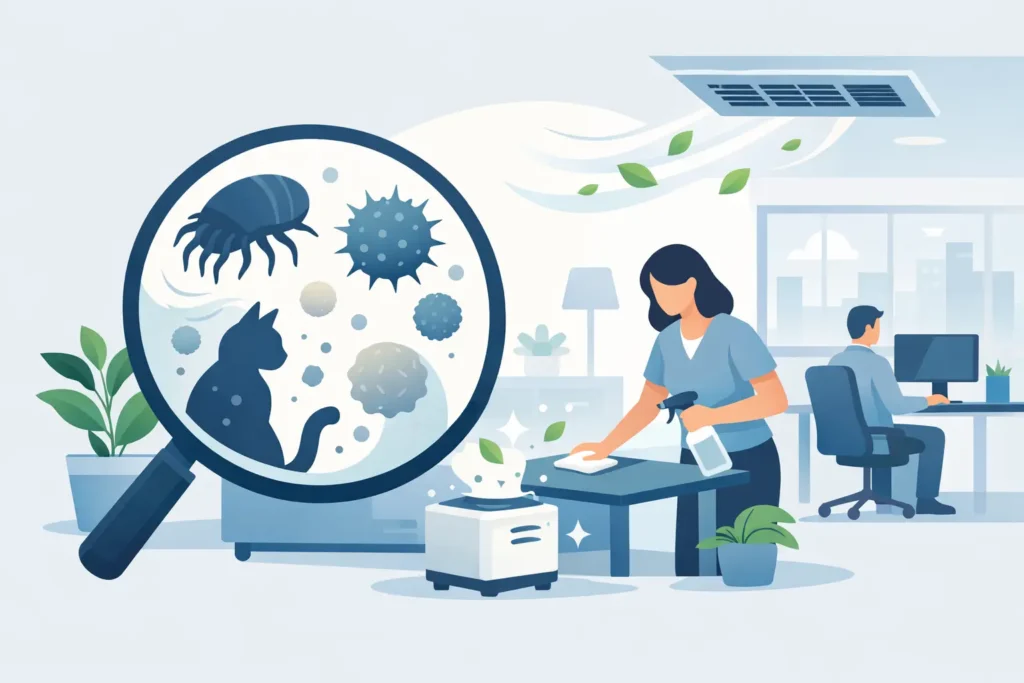
A dusty reception counter, a musty break room, or a carpet that has not been properly cleaned can affect more than the appearance of your office. Learning how to reduce workplace allergens helps create a more comfortable space for employees, visitors, and customers – while supporting the professional image your business works hard to maintain.
Allergens can build up quietly in busy workplaces. They settle into carpet fibers, collect on blinds and vents, cling to upholstered chairs, and travel indoors on shoes, clothing, boxes, and outdoor air. A consistent cleaning plan is one of the most practical ways to control them.
Know Where Workplace Allergens Collect
Most offices and retail spaces do not have one single allergen problem. They have several small sources that add up over time. Common triggers include dust mites, pollen, mold spores, pet dander brought in from outside, and particles from pests. Fragrances and harsh cleaning chemicals may also irritate employees who have sensitivities, even though they are not technically allergens.
Carpeted areas are a major concern because they hold dust, pollen, and debris below the surface. Upholstered seating, fabric partitions, entry mats, window treatments, and paper-heavy work areas can do the same. In kitchens and break rooms, crumbs and moisture can attract pests or contribute to mold if spills are left behind.
The HVAC system also matters. When filters are overdue for replacement or vents are dusty, air movement can carry particles throughout the workplace. Cleaning alone cannot solve a ventilation issue, but cleaning and maintenance work better together.
Build a Cleaning Schedule That Targets Allergens
The best approach is not simply cleaning more often. It is cleaning the right areas at the right frequency. High-traffic entrances, shared workstations, break rooms, restrooms, and reception areas need regular attention because they receive the most outside debris and daily use.
Daily service should focus on removing surface dust and waste before it becomes embedded or spreads. This includes wiping hard surfaces with clean microfiber cloths, emptying trash, cleaning break room counters, and addressing visible spills. Microfiber is especially helpful because it captures fine dust instead of pushing it around like a dry paper towel or feather duster can.
Vacuuming should be scheduled frequently in carpeted work areas, especially near entrances, hallways, waiting rooms, and employee desks. A vacuum with a HEPA filtration system is preferable because it is designed to capture very small particles rather than releasing them back into the air. The condition of the vacuum matters just as much as the equipment itself. A full bag, clogged filter, or poorly maintained machine will not deliver the results your workplace needs.
Hard floors should be damp mopped rather than swept with a dry broom whenever possible. Dry sweeping can send settled dust back into the air. For dusting, start with higher surfaces such as shelves, ledges, and blinds, then work downward so particles can be removed from lower surfaces and floors afterward.
Do Not Forget the Overlooked Surfaces
Allergen control often slips in the places employees do not see every day. Tops of cabinets, baseboards, ceiling vents, light fixtures, window sills, and behind furniture can collect heavy dust over time. These areas do not always need daily cleaning, but they should be included in a planned deep-cleaning rotation.
Computer keyboards, desk phones, chair arms, and shared equipment deserve regular attention as well. They may not hold the same volume of dust as carpeting, but they are touched constantly and can quickly look neglected. A clean workstation supports comfort and shows employees that management takes their environment seriously.
Control What Comes In From Outside
Many workplace allergens enter through the front door. Pollen, dirt, and other outdoor particles are carried in on shoes, delivery carts, packages, and clothing. During high-pollen seasons, this can become more noticeable in lobby areas and spaces near frequently opened doors.
Use quality entry mats both outside and inside each main entrance. Mats should be large enough for people to take several steps across them, not just step on them once. They also need routine vacuuming and cleaning. A dirty mat cannot trap additional debris effectively.
Keeping doors and windows closed during days with high pollen can help, if your building setup allows it. For businesses with customer traffic, that may not always be realistic. In those cases, prioritize frequent attention to entry floors, glass doors, reception furniture, and nearby vents.
Encourage staff to keep coats, bags, and personal items organized instead of piling them on shared soft seating. This is a small habit, but it can limit clutter and make routine cleaning more effective.
Improve Air Quality Without Overpromising
Air quality is a building-wide concern, so it requires coordination between cleaning staff, property managers, and HVAC professionals. Replace HVAC filters on the schedule recommended for your system, and consider higher-efficiency filters if the equipment can safely accommodate them. An HVAC technician can advise on the right option for your building.
Keep supply and return vents clear of furniture, boxes, and dust buildup. If employees report persistent odors, visible moisture, or mildew near vents, investigate quickly. Those signs may point to an issue that needs more than standard cleaning.
Portable air cleaners with HEPA filters can be useful in enclosed rooms, crowded work areas, or spaces where a particular employee has significant sensitivities. They are not a substitute for proper ventilation, moisture control, and cleaning, but they can be a helpful extra layer.
Avoid relying on strong fragrances to make an office feel clean. Scent can cover an odor temporarily, but it does not remove the source. In some workplaces, heavily scented sprays, plug-ins, and products can cause headaches or respiratory irritation. Low-odor cleaning products and good source control are usually the better choice.
Keep Moisture and Food From Creating Bigger Problems
Mold spores and pest-related allergens are often connected to moisture, food residue, and delayed maintenance. A leaking sink under the break room cabinet or a damp carpet after a spill can become a larger issue if it is ignored.
Report and repair leaks promptly. Dry wet carpeting, ceiling tiles, upholstery, and wall areas as soon as possible. If there is visible mold growth or a recurring moisture issue, bring in the appropriate building or remediation professional rather than treating it as a routine cleaning task.
In break rooms, employees should wipe up food spills, store food in sealed containers, and avoid leaving dishes overnight. Cleaning crews can maintain the space, but daily habits make a real difference. Trash should be removed consistently, especially where food waste is present.
Give Employees a Simple Way to Report Concerns
Employees are often the first to notice patterns, such as dust returning quickly near a vent, a lingering odor in a conference room, or symptoms that seem worse in one area. Give them a clear way to report cleaning and maintenance concerns without making them feel like they are complaining.
A simple process can be enough: employees notify an office manager, who documents the location and concern, then routes it to the cleaning provider, building management, or HVAC contractor as appropriate. The goal is not to diagnose anyone’s health condition. It is to identify and correct environmental issues before they grow.
For employees with known allergies or asthma, reasonable adjustments may include relocating a desk away from a problematic area, reducing scented products, or scheduling disruptive deep-cleaning work after hours. The right solution depends on the workplace, the building, and the source of the problem.
When Professional Cleaning Makes the Difference
Routine in-house cleaning can handle many daily tasks, but periodic professional service provides a more thorough reset. Detailed carpet care, high and low dusting, restroom sanitation, break room cleaning, and attention to neglected surfaces help reduce the buildup that basic tidying misses.
For office managers and business owners, consistency is the real value. A trained cleaning team follows a defined process, uses appropriate equipment, and helps keep the workplace ready for employees and customers day after day. JPR Cleaning provides dependable commercial cleaning services for businesses that want a cleaner, healthier, and more polished environment.
A workplace does not need to look visibly dirty to hold allergens. Start with the areas your team uses most, correct moisture or ventilation concerns quickly, and keep a cleaning schedule that does not leave dust and debris time to build up.