
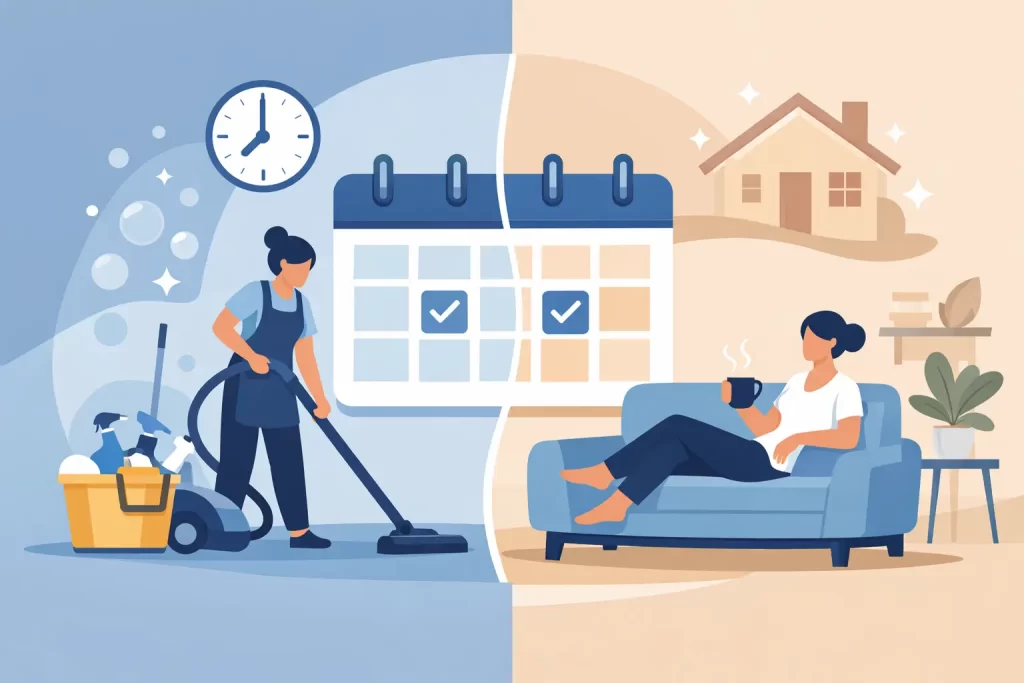
Miss a couple of cleanings, and a home or workplace starts to feel off fast. Dust settles, bathrooms lose that fresh look, floors show every footprint, and clutter starts to compete with your schedule. That is exactly why biweekly cleaning is such a popular option. It gives you consistent upkeep without the higher cost of weekly service, and for many homes and businesses, that balance is the sweet spot.
Biweekly cleaning works best when you want a space that stays presentable, healthy, and easier to manage between visits. It is often the right choice for busy households, apartment residents, small offices, and retail spaces that need regular attention but do not face heavy daily mess. The key is knowing what this schedule can realistically handle and where a different frequency may make more sense.
What biweekly cleaning really means
In most cases, biweekly cleaning means service every two weeks. That regular rhythm helps prevent dirt, dust, and grime from building up to the point where each visit feels like a reset from scratch. Instead, the work stays in maintenance mode, which is usually more efficient and more predictable.
For homeowners, that can mean cleaner bathrooms, more manageable kitchen upkeep, and less time spent trying to catch up on weekends. For business owners, it can mean a more polished appearance for customers and a better day-to-day environment for staff. The schedule is simple, but the benefit is consistency.
There is one practical detail worth mentioning. A two-week gap is long enough for some buildup to happen, especially in high-traffic areas. That is why biweekly cleaning tends to perform best when the space is already in decent condition or when the people using it handle light upkeep between visits.
Who benefits most from biweekly cleaning
Biweekly cleaning is a strong fit for people who want dependable results without paying for more service than they need. That includes many New Jersey households where work, commuting, school schedules, and family responsibilities leave little time for deep cleaning.
A single person or couple in an apartment may find that every two weeks is more than enough to keep the place under control. A family with older children may also do well on this schedule if everyone contributes to basic tidying between appointments. In these situations, professional cleaning takes care of the heavier and more detailed tasks while the household handles the day-to-day mess.
On the commercial side, smaller offices and some retail spaces often benefit from a biweekly cleaning plan when foot traffic is moderate and employees maintain basic order during the week. If your business does not generate constant dirt, debris, or restroom use, every two weeks may be enough to support a clean, professional appearance.
The common factor is not square footage alone. It is how the space is used. A small office with frequent visitors may need more attention than a larger one with limited traffic. A modest home with pets, young children, or frequent guests may outgrow a biweekly schedule quickly.
When biweekly cleaning may not be enough
This is where honest expectations matter. Biweekly cleaning is effective, but it is not the right fit for every situation.
If you have a busy household with small children, multiple pets, or constant kitchen and bathroom use, a two-week gap can feel too long. The same goes for commercial spaces where restrooms, entryways, and shared surfaces see heavy daily traffic. In those cases, weekly service may be the better investment because it protects the overall condition of the space and keeps cleaning needs from piling up.
There is also the issue of first-time service. If a home or business has gone a long stretch without professional attention, starting with biweekly cleaning may not produce the results you expect right away. A deep cleaning at the beginning often makes more sense, followed by a recurring schedule that maintains the work.
That is one of the most important trade-offs to understand. Biweekly cleaning is excellent for maintenance. It is less effective as a substitute for catching up on months of buildup.
What is usually included in a biweekly cleaning visit
A professional biweekly cleaning visit typically focuses on the areas that affect cleanliness, appearance, and comfort most. In a home, that usually means kitchens, bathrooms, floors, surfaces, dusting, and general straightening of the cleaned areas. In an office or retail setting, it may include floors, restrooms, break areas, touchpoint cleaning, trash removal, and surface care.
Because the service is recurring, there is an advantage. Cleaning teams become familiar with the space, the problem areas, and the standards expected. That familiarity often leads to more consistent results than one-time service because there is already a system in place.
At the same time, recurring service is not the same as unlimited service. If a space has excessive clutter, special materials, post-construction debris, or neglected buildup, those conditions may require extra time or a different type of appointment. A reliable cleaning company should be clear about that upfront.
The cost advantage of biweekly cleaning
One reason biweekly cleaning remains so popular is that it often delivers the best balance between budget and results. Weekly service gives tighter control, but not every property needs that level of frequency. Monthly service costs less, but many spaces accumulate too much dust, grime, and disorder over four weeks.
Biweekly cleaning sits in the middle. It reduces the amount of heavy scrubbing and catch-up work you would otherwise face, while keeping recurring costs more manageable than weekly visits. For many customers, that makes it the most practical long-term choice.
It can also help protect surfaces and finishes. When bathrooms, floors, counters, and shared areas are cleaned on a regular basis, dirt and residue have less time to settle in. That matters in both homes and businesses because appearance and upkeep are connected.
How to know if this schedule will work for you
The easiest way to decide is to look at what your space looks like on day 10 or day 12 after a cleaning. If it still feels reasonably fresh and manageable, biweekly cleaning is probably a good fit. If it already feels overdue, weekly service may be the smarter option.
You should also think about your own routine. Are you willing to do basic touch-up tasks between visits, like wiping counters, managing dishes, and keeping clutter under control? If yes, a biweekly schedule can work very well. If not, the gap between cleanings may feel too noticeable.
For businesses, ask whether customers or employees regularly judge the space by what they see. If presentation plays a direct role in trust, comfort, or brand image, cleaning frequency should support that standard. A clean office or storefront is not just about appearance. It affects how people feel when they walk in.
Why provider reliability matters as much as frequency
A good cleaning schedule only works when the service itself is dependable. If visits are inconsistent, rushed, or handled without care, even the right frequency will fall short.
That is why many customers look for professionally trained staff, clear communication, and a company that is licensed, insured, and bonded. Trust matters when people are working inside your home or business. So does consistency. You want to know the job will be done thoroughly, on time, and with respect for your space.
A recurring service should make life easier, not create another thing to monitor. The best experience comes from a provider that understands your property, follows through, and keeps standards steady over time. For customers looking for that kind of support, JPR Cleaning focuses on reliable recurring service designed to keep homes and businesses clean, healthy, and presentable.
Making biweekly cleaning work better
If you choose biweekly cleaning, a few small habits can make the service even more effective. Keeping surfaces reasonably clear helps the cleaning team focus on actual cleaning instead of working around clutter. Handling spills quickly prevents stains and sticky buildup. Paying extra attention to daily-use areas like sinks, counters, and entry floors can also help the space hold up better between visits.
None of that replaces professional service. It just helps you get more value from it. The goal is not perfection between cleanings. It is keeping the space stable enough that each visit builds on the last one.
Biweekly cleaning is not about doing the bare minimum. It is about choosing a schedule that fits real life, supports a healthier environment, and keeps your home or business looking cared for without overspending. If your space needs steady maintenance more than constant attention, every two weeks may be exactly the right pace.
Pingback: A Weekly Home Cleaning Plan for Busy Homes - JPR Cleaning
Pingback: House Cleaning Versus Maid Service Explained - JPR Cleaning
Pingback: Cleaning Services Edison NJ: Reliable Care That Shows - JPR Cleaning